Whipple Supercharger Porting & Rebuild Services: What FAS Actually Offers
Whipple Superchargers is one of the biggest names in forced induction — and if you're running one, FAS ports and rebuilds them. This isn't a buyer's guide to shopping for a new Whipple unit; it's a breakdown of what a Whipple actually is, what porting changes, and the specific services we offer.
What a Whipple Supercharger Is
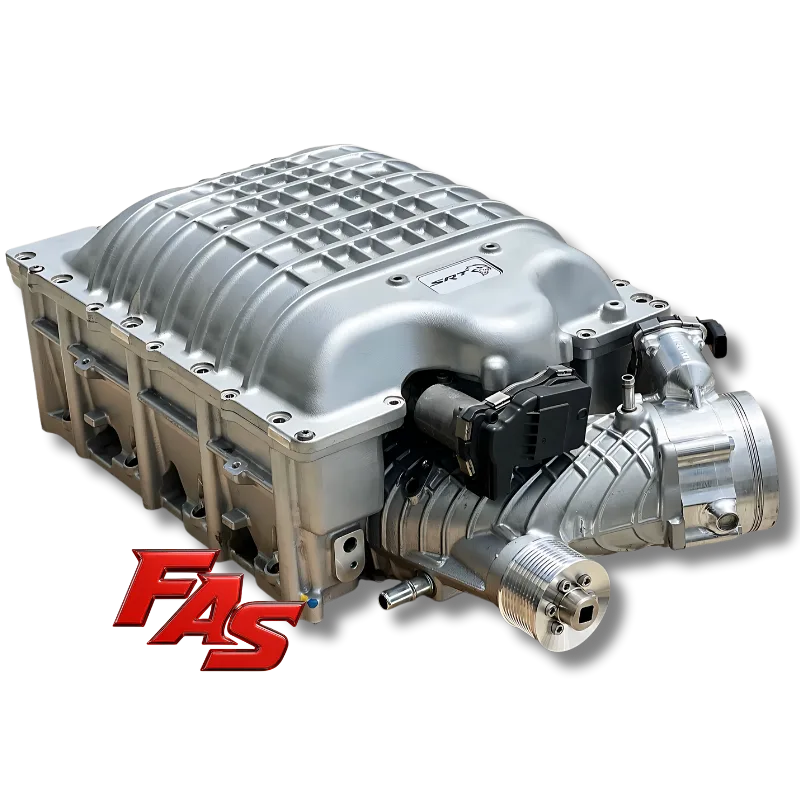
Whipple builds twin-screw positive-displacement superchargers — the same broad category as the Hellcat's factory IHI unit, mechanically distinct from the Roots-style blowers and centrifugal units used elsewhere in the industry. Twin-screw design means two interlocking helical rotors compress the charge internally as it moves through the housing, which gives a twin-screw unit strong low-RPM boost response compared to a centrifugal blower that needs RPM to build boost.
Whipple units show up across a wide range of platforms — Mopar, Ford, GM, and truck applications — in a range of displacements. Like any forced-induction unit, the housing and inlet/outlet geometry are cast for manufacturing repeatability rather than maximum airflow, which is where porting comes in.
What Porting a Whipple Actually Changes
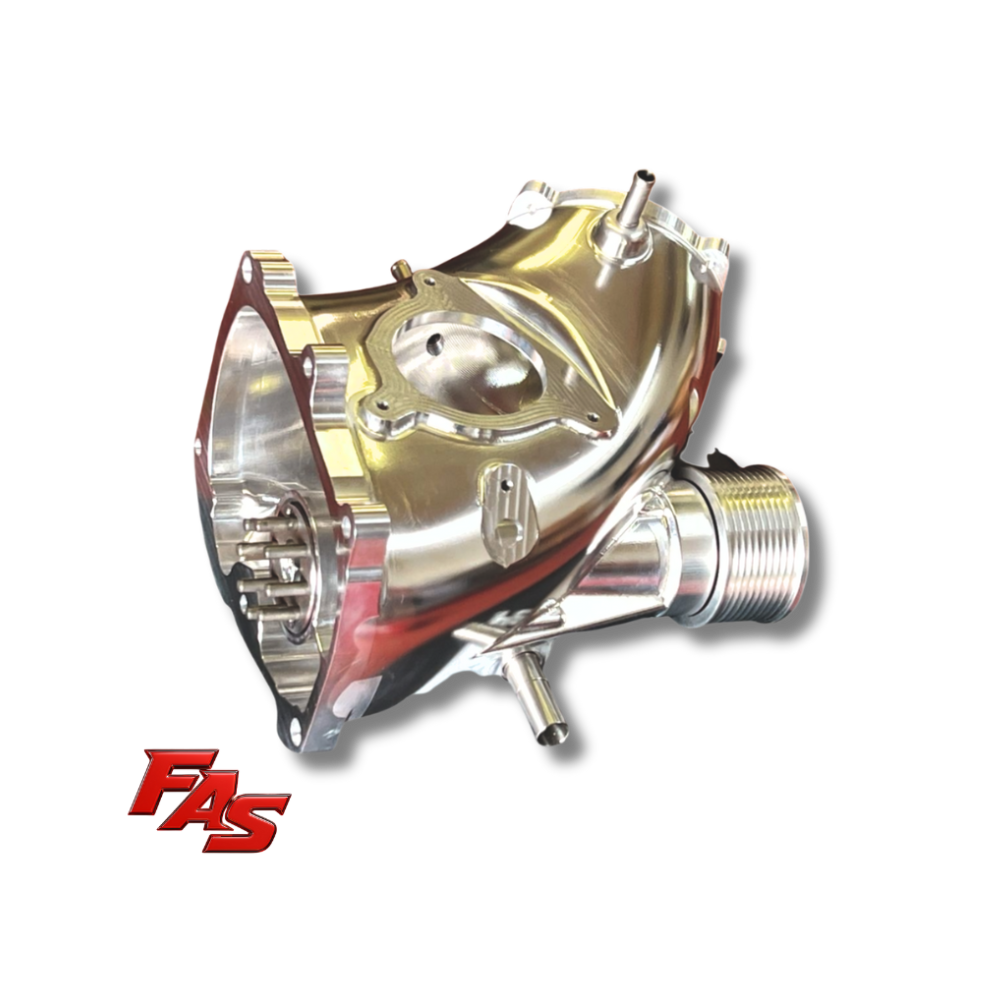
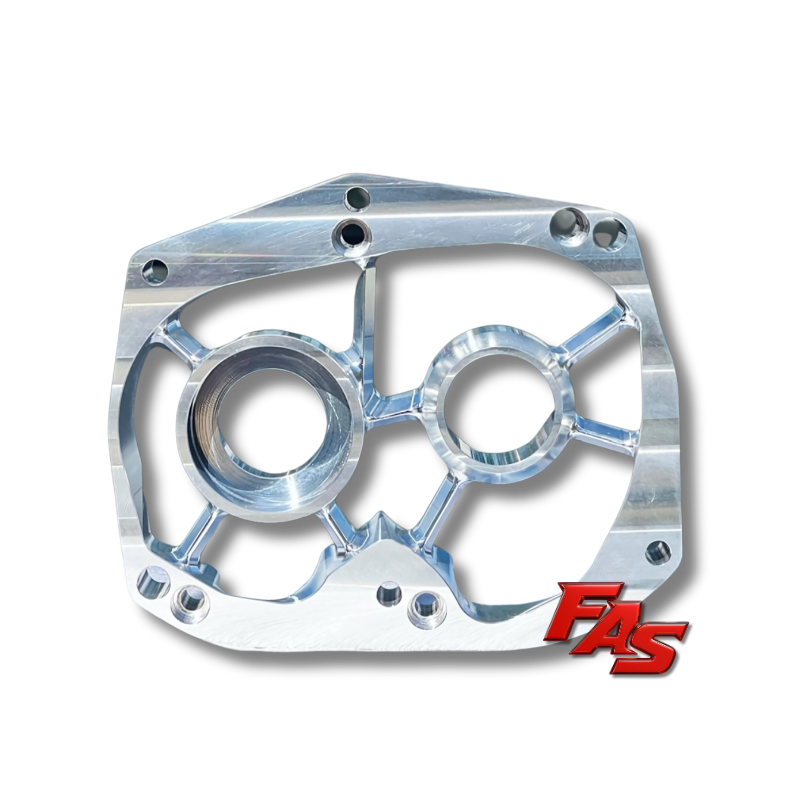
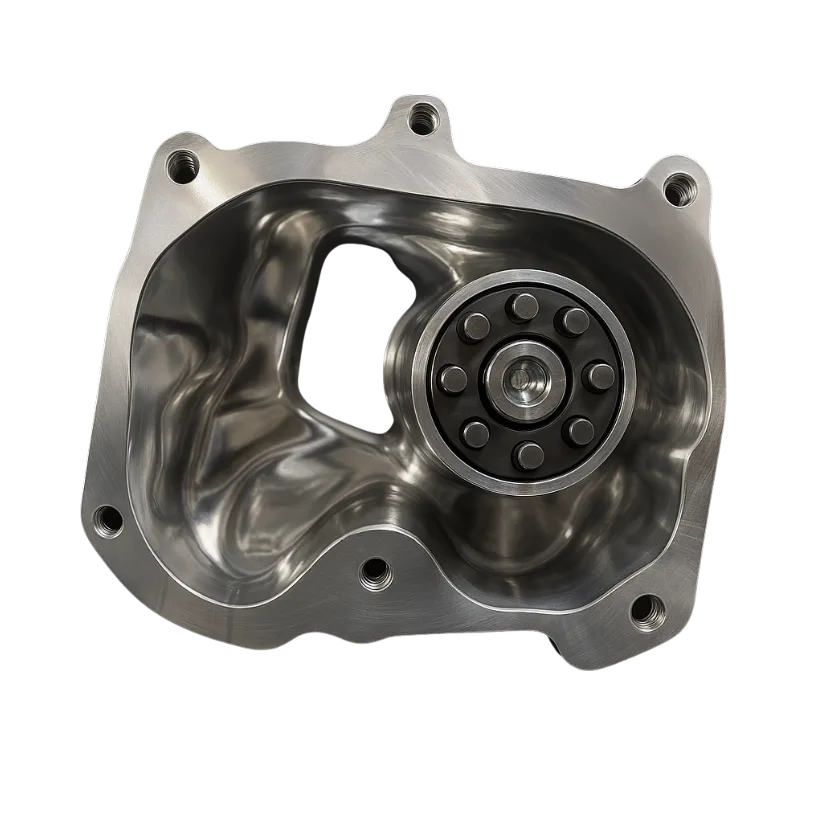
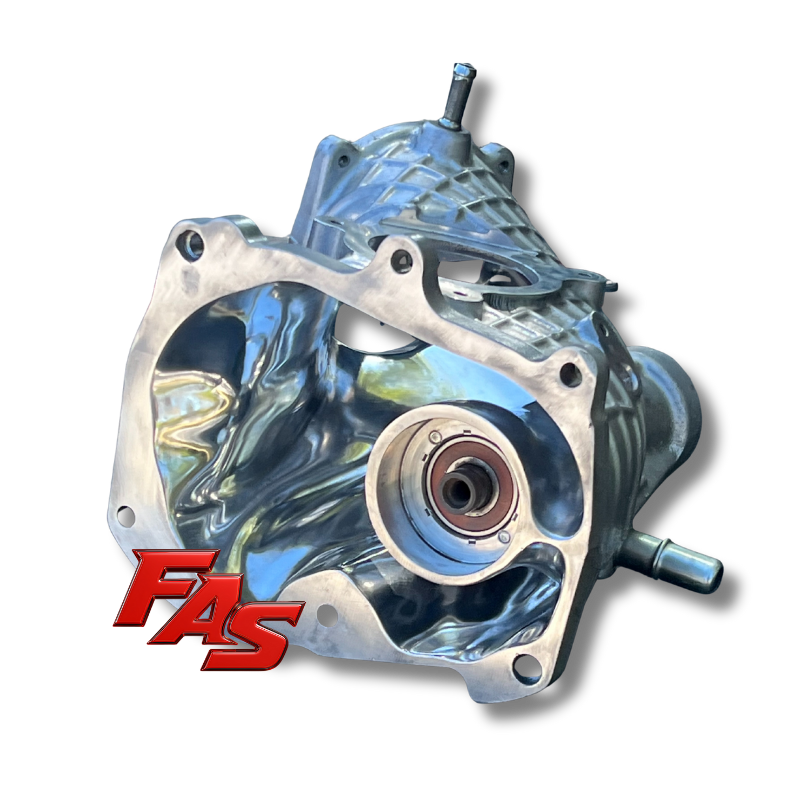
Porting is the process of removing material from the inlet and outlet passages of the supercharger housing to reduce airflow restriction — smoothing the path so air enters and exits the rotor pack with less turbulence and less pressure drop. The same principle FAS applies to Hellcat IHI superchargers applies to a Whipple unit: the cast passages are the limiting factor, and precision porting opens them up without touching the rotor pack itself.
FAS Whipple Services
3.0L Whipple Supercharger Porting. Precision ported for the smoothest, most efficient finish possible on the 3.0L unit.
FAS 4.5L Whipple Supercharger Race Porting. Race-level porting for the 4.5L Whipple — maximum airflow and reduced restriction for builds pushing the upper end of what the platform supports.
Both are the same hands-on process we run on every supercharger that comes through the shop: inspect the core, port the housing, and hand-finish for the smoothest possible flow path.
Is Porting Right for Your Build?
How much a ported Whipple gains over a stock unit depends on your specific supercharger size, pulley, boost level, and the rest of the combination — that's not something we're going to print as a blanket number here. What we can tell you is that the housing restriction porting addresses is real and present on every stock Whipple unit, and it's a mod that pays off regardless of what else is on the car.
If you're deciding between a Whipple and a Hellcat-style IHI unit for your build, our 2.4L vs 2.7L Hellcat supercharger comparison covers how the IHI twin-screw units stack up on displacement and gains — useful context even if you land on a Whipple.
Get Your Whipple Ported
Send in your 3.0L or 4.5L Whipple supercharger for precision porting, or contact FAS Motorsports to talk through what porting means for your specific build.
Related Posts
Hellcat Supercharger Porting Explained: What It Does and When You Need It
If you're pushing a Hellcat, TRX, or Trackhawk past 700 whp, you've probably asked about supercharger porting — here's what it is & if it's right for you.
Hellephant C170 Engine: What It Is, What It Makes, and What It Costs
The Dodge Hellephant C170 crate engine makes 1,000 hp and 950 lb-ft from 426 cubic inches. What it is, what it costs, and what a complete build runs.
LT4 & Hellcat Supercharger Porting: FAS Porting Process, Gains & What It Costs
LT4 (C7 Z06, ZL1), 2.4L Hellcat TVS, and 2.7L IHI supercharger porting done in-house. Precision CNC port work, flow-bench verified, shipped back in 3–5 business days from Punta Gorda, FL.