Trackhawk vs TRX: Which Platform Makes More Reliable Power?
Trackhawk vs TRX: Which Platform Makes More Reliable Power?
Raw power numbers are easy to find online. Reliability data is not.
Both the Trackhawk and the TRX make serious factory power, and both can be pushed significantly further. But “how much power can it make” and “how long will it make that power without breaking” are different questions.
We see these engines in the shop. Here’s the honest breakdown.
The 6.2L HEMI: Shared Foundation, Different Stress Points
Both the Trackhawk and the TRX run variants of the 6.2L supercharged HEMI. The short block — block, crank, rods, pistons — is shared architecture. FCA/Stellantis engineered this engine to handle the power levels it came from the factory with, and with reasonable maintenance it handles more.
The factory rotating assembly is a known quantity. In NA Hellcat applications, stock rods and pistons regularly survive 800+ wheel horsepower builds on the dyno. In the SUV/truck applications, the added weight and different tuning strategy means the engine is rarely rev-limited as aggressively, which is actually good for longevity.
Where reliability diverges is the supercharger and supporting systems, not the short block.
Supercharger Wear: 2.4L vs 2.7L
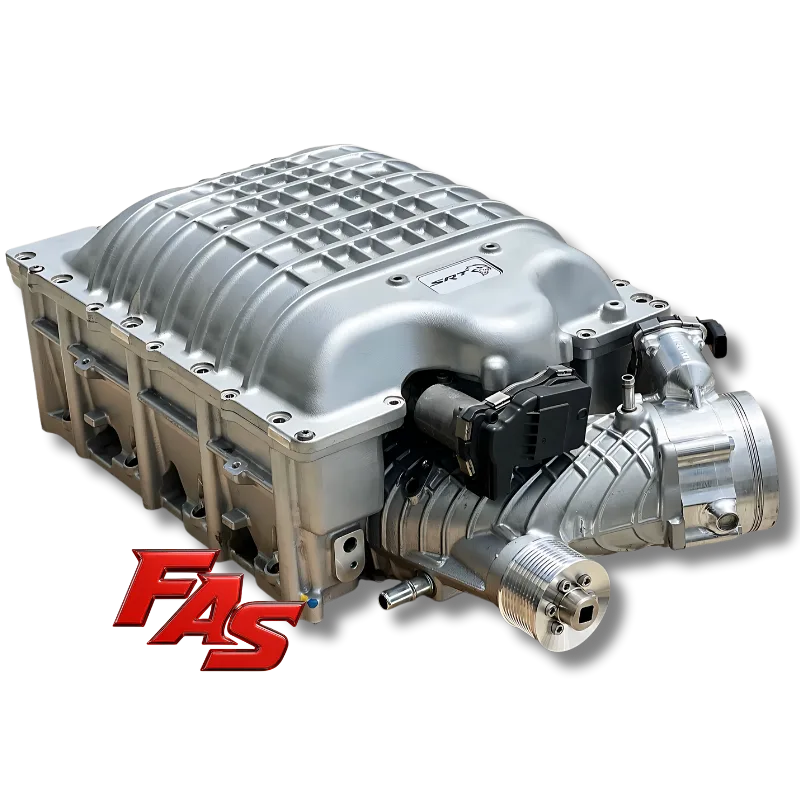
The IHI twin-screw is a precision piece of equipment. The rotors spin on tight tolerances and the bearings — particularly the snout bearing and the nose cone bearing — experience high loads at boost.
What we see on the bench:
2.4L (Trackhawk): Snout bearing wear shows up first, typically around 50,000–80,000 miles in non-abused street cars. Bearing degradation produces noise (whine change, grinding on cold starts) and eventually affects rotor clearance. Left unaddressed, a worn snout bearing can cause rotor contact — which is an expensive rebuild scenario.
2.7L (TRX): Same fundamental wear points, but the larger unit runs at lower RPM relative to the engine to make its higher displacement work. Lower RPM at equivalent boost levels theoretically means less bearing stress per unit time. In practice, the 2.7L units we’ve seen in the shop have similar mileage-based wear patterns — maintenance intervals should be treated the same.
The takeaway: Both units require periodic inspection. If you’re putting serious miles on either platform, plan for a bearing inspection at 60,000 miles or sooner if you hear any change in supercharger sound profile.
Heat: The TRX Has a Structural Advantage
The Ram 1500 DT chassis gives the TRX a larger engine bay, a longer hood, and more thermal mass overall. The TRX’s intercooler system runs slightly cooler under repeated use because the radiator stack and engine compartment layout benefit from the truck’s proportions.
In back-to-back dyno pulls, the TRX loses less power to heat soak. This translates to more consistent power delivery and less stress on internals during thermal cycles.
The Trackhawk can manage heat with driver discipline and upgraded intercooler chiller systems. But factory vs. factory, the TRX is the more thermally stable platform.
Drivetrain: Where the Trackhawk Can Struggle
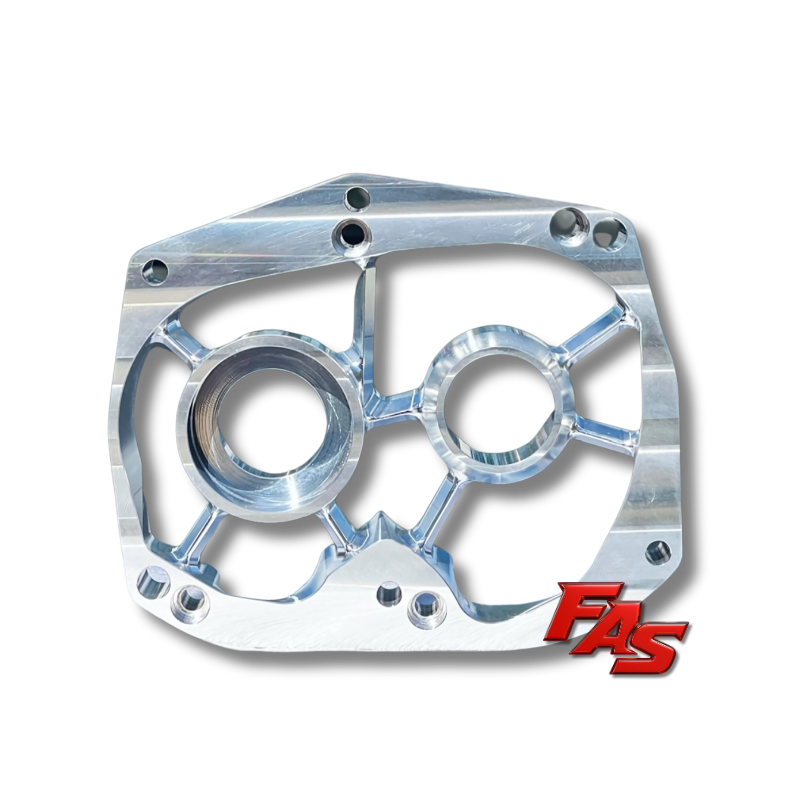
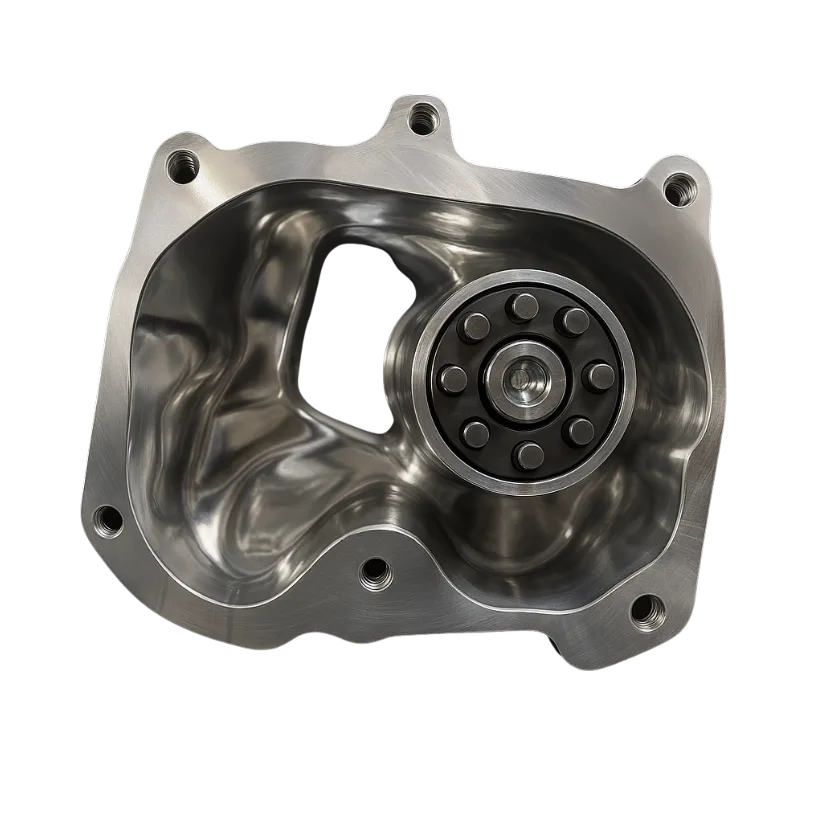
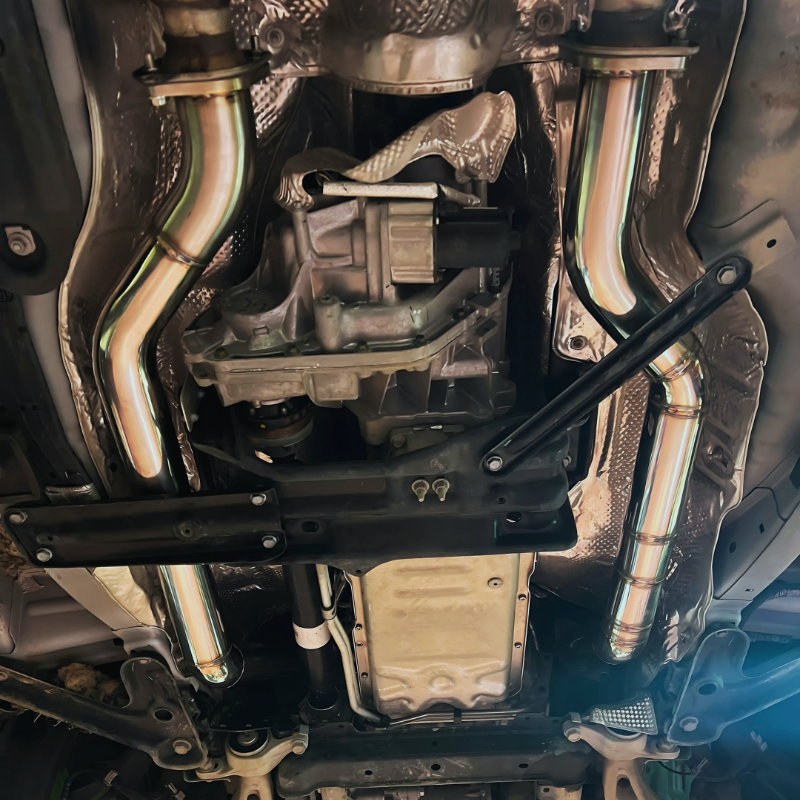
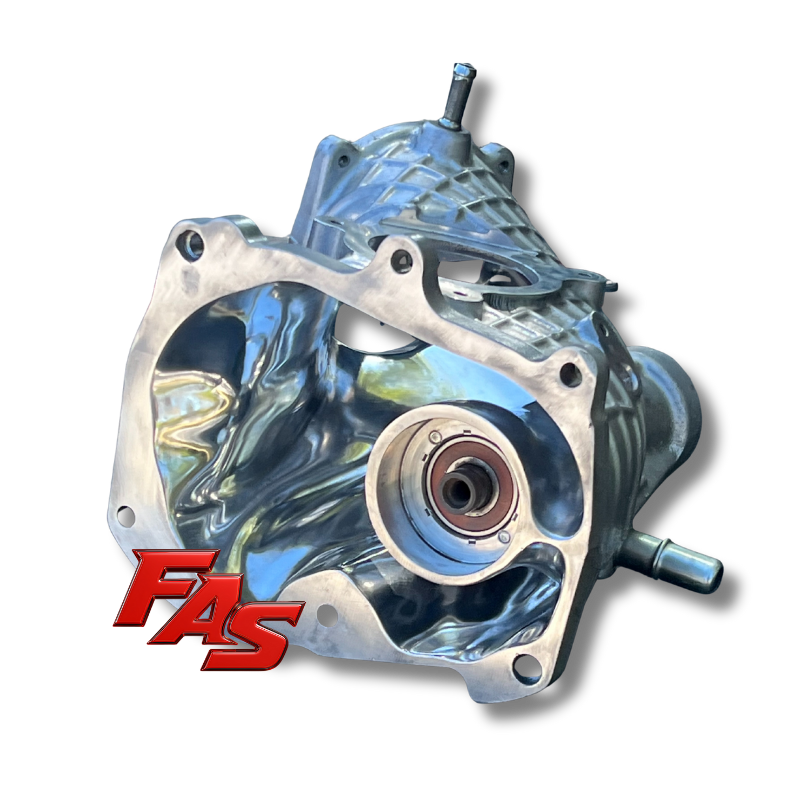
The Trackhawk’s transfer case is a known limitation above stock power levels. At 707 hp from the factory, it’s right at the edge of comfortable operation. Owners pushing 800+ wheel horsepower frequently report transfer case issues under aggressive launches or repeated hard acceleration.
The TRX’s drivetrain is built for a heavier vehicle with more torque and handles added power with more margin. For reliable street driving at elevated power levels, the TRX’s drivetrain is more forgiving.
The Reliability Verdict
At stock power levels with normal maintenance, both platforms are equally reliable. The HEMI short block is not the weak point.
For modified power reliability:
- Below 750 whp: Both platforms are comparable. Maintain the supercharger, keep up with fluids.
- 750–850 whp: The TRX has an edge due to thermal stability and drivetrain margin. The Trackhawk can match it with upgraded cooling and drivetrain support.
- 850+ whp: The TRX is the more logical platform. The 2.7L has more headroom, the drivetrain is more robust, and the thermal envelope is larger.
The Trackhawk isn’t fragile at elevated power — it just requires more proactive supporting work.
What We Recommend
If reliability is your primary concern targeting serious power (800+ whp), the TRX is the better starting point. If you already own a Trackhawk, the path is clear: porting + tune first, supporting mods second, address the drivetrain before you need to.
Either way, the supercharger is not a maintenance-optional component. Inspect it, service it, and don’t wait for a noise to tell you something’s wrong.
See our supercharger services for Trackhawk and TRX platforms →
Related Posts
Hellcat Supercharger Porting Explained: What It Does and When You Need It
If you're pushing a Hellcat, TRX, or Trackhawk past 700 whp, you've probably asked about supercharger porting — here's what it is & if it's right for you.
Hellephant C170 Engine: What It Is, What It Makes, and What It Costs
The Dodge Hellephant C170 crate engine makes 1,000 hp and 950 lb-ft from 426 cubic inches. What it is, what it costs, and what a complete build runs.
LT4 & Hellcat Supercharger Porting: FAS Porting Process, Gains & What It Costs
LT4 (C7 Z06, ZL1), 2.4L Hellcat TVS, and 2.7L IHI supercharger porting done in-house. Precision CNC port work, flow-bench verified, shipped back in 3–5 business days from Punta Gorda, FL.