Trackhawk vs TRX: What You're Actually Choosing When You Decide to Mod Either Platform
Trackhawk vs TRX: What You’re Actually Choosing When You Decide to Mod Either Platform
The Trackhawk and the TRX share a few obvious things: they’re both factory-supercharged, both absurdly fast for their size, and both magnets for owners who want more.
But they’re not interchangeable platforms. The supercharger setups are different. The power ceilings are different. The failure modes are different. And the modification path you’ll follow depends almost entirely on which one you’re standing in front of.
Here’s a platform-level breakdown before you start spending money.
The Engines
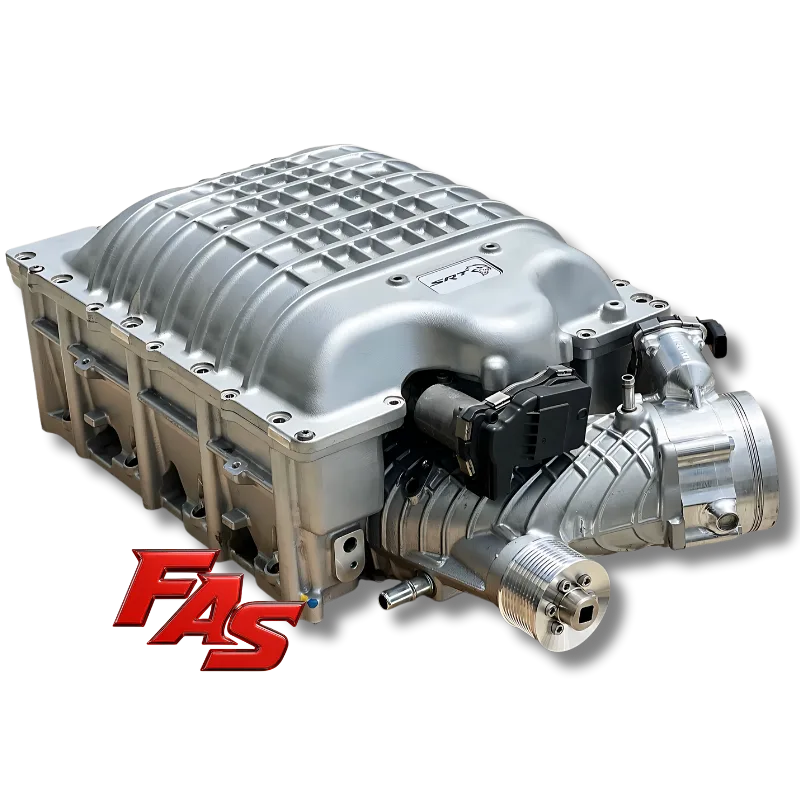
The Trackhawk runs the 6.2L supercharged HEMI — the same engine family as the Hellcat sedan and the Redeye. It makes 707 horsepower from the factory with the standard IHI 2.4L twin-screw supercharger. The Trackhawk’s version of this engine is identical to what you’ll find in a Challenger or Charger Hellcat: same supercharger, same bore and stroke, same architecture.
The TRX runs the Hellcat-derived 6.2L as well — but with the 2.7L IHI supercharger (the larger unit that also appears in the Redeye). Factory rating is 702 hp. The displacement difference between the 2.4L and 2.7L is meaningful: the larger unit moves more air per revolution and reaches its efficiency ceiling at a higher power level.
Both engines share the same basic block, heads, and rotating assembly. The supercharger is the key distinction.
Supercharger Architecture: 2.4L vs 2.7L IHI
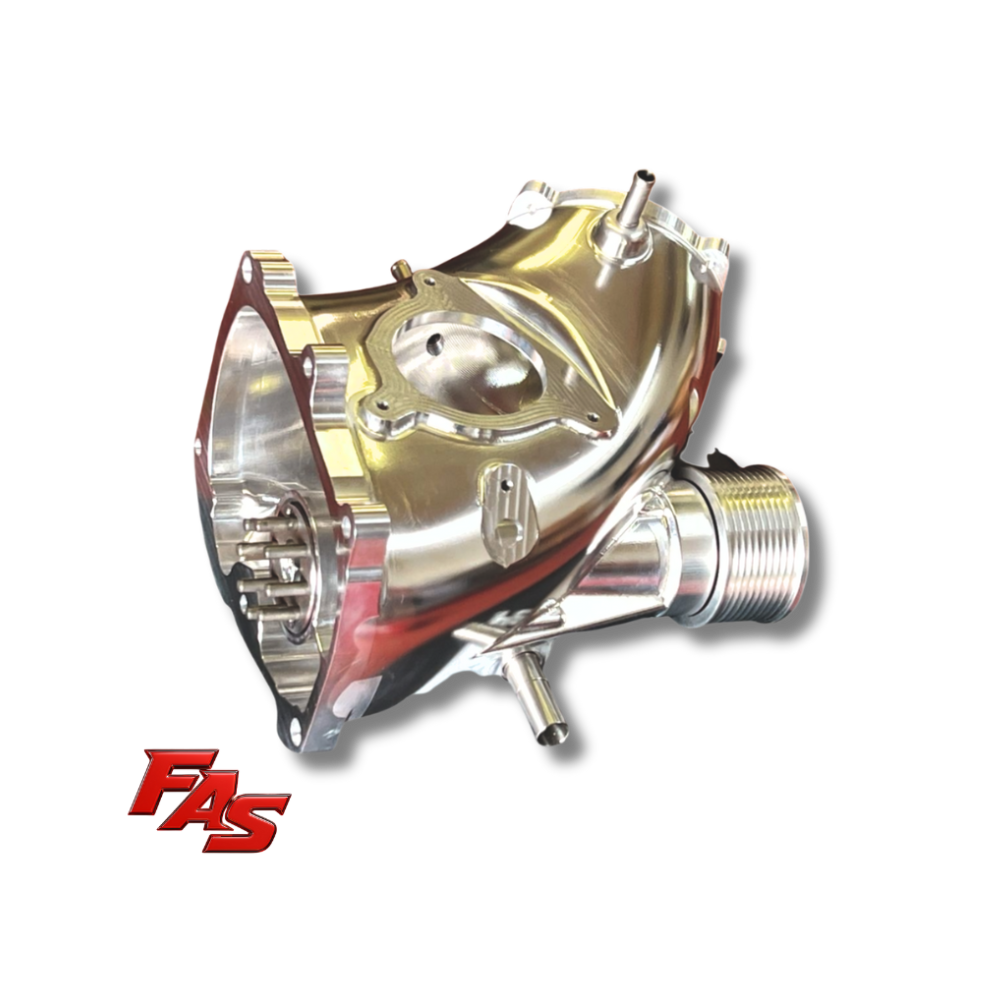
The IHI twin-screw supercharger is a roots-type positive-displacement blower. Both the 2.4L and 2.7L versions are belt-driven off the crankshaft, with an integrated heat exchanger (intercooler) built into the upper intake manifold above the rotors.
2.4L (Trackhawk):
- Stock boost: ~11.6 psi
- Maximum efficient output: roughly 750–850 wheel horsepower with bolt-ons and tune
- Known restriction: the snout (inlet throat) and rotor port entries
- Common upgrade path: snout porting → upper pulley → lower pulley → rebuilt/ported snout
2.7L (TRX / Redeye):
- Stock boost: ~14.5 psi
- Larger rotor housing = more displacement = more potential airflow
- Maximum efficient output before heat and boost bypass issues: 850–950+ wheel horsepower
- Common upgrade path: porting → lower pulley → supporting mods
The TRX has a head start in terms of airflow ceiling — the 2.7L unit simply runs out of steam at a higher power level. For owners targeting 700–800 whp, both platforms work well. Above that, the TRX’s 2.7L has more headroom.
Related Posts
Hellcat Supercharger Porting Explained: What It Does and When You Need It
If you're pushing a Hellcat, TRX, or Trackhawk past 700 whp, you've probably asked about supercharger porting — here's what it is & if it's right for you.
Hellephant C170 Engine: What It Is, What It Makes, and What It Costs
The Dodge Hellephant C170 crate engine makes 1,000 hp and 950 lb-ft from 426 cubic inches. What it is, what it costs, and what a complete build runs.
LT4 & Hellcat Supercharger Porting: FAS Porting Process, Gains & What It Costs
LT4 (C7 Z06, ZL1), 2.4L Hellcat TVS, and 2.7L IHI supercharger porting done in-house. Precision CNC port work, flow-bench verified, shipped back in 3–5 business days from Punta Gorda, FL.