Snout Porting vs. Upper Pulley vs. Lower Pulley: Which Mod First? (Decision Chart)
When you start researching Hellcat supercharger mods, three names come up constantly: snout porting, upper pulley, lower pulley. Each one changes how your blower makes power — but they are not interchangeable, and the order matters. Do them out of sequence and you leave real gains on the table, or worse, you spend money on boost you cannot use because the inlet still cannot feed the rotors.
This guide breaks down what each mod actually does, then gives you a goal-based decision chart so you can match the right mod — or the right sequence — to where your build actually is.
What Each Mod Actually Does
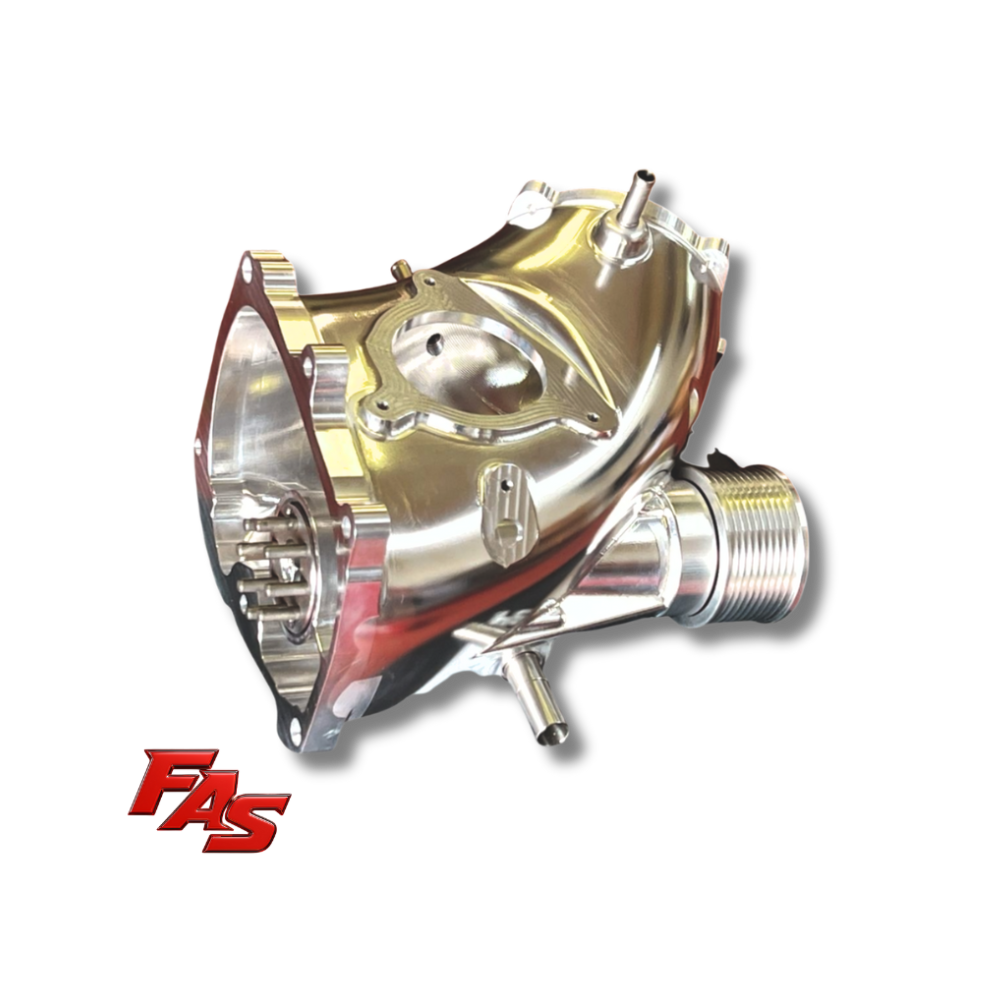
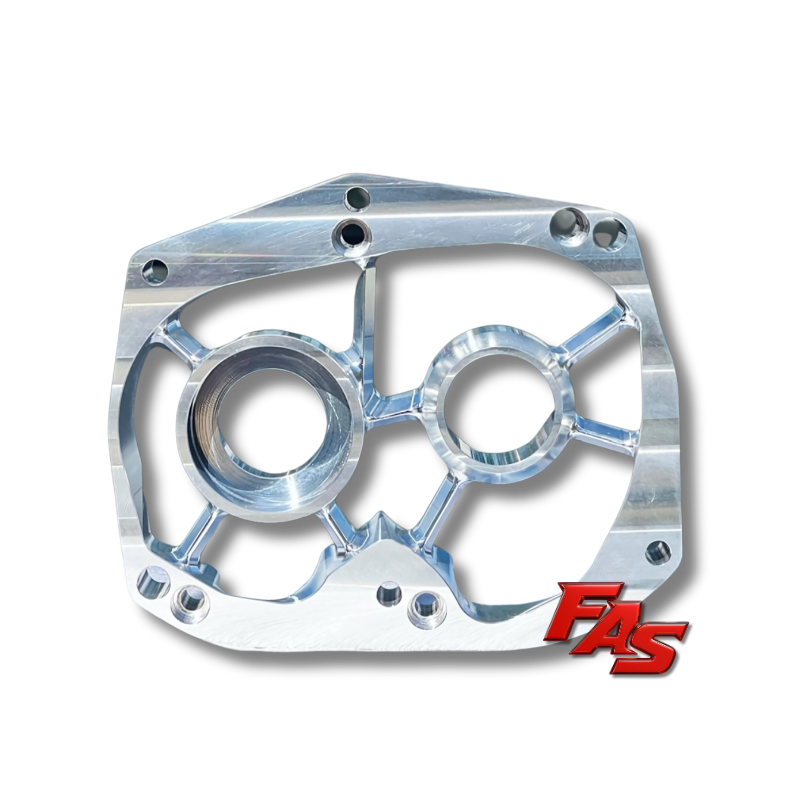
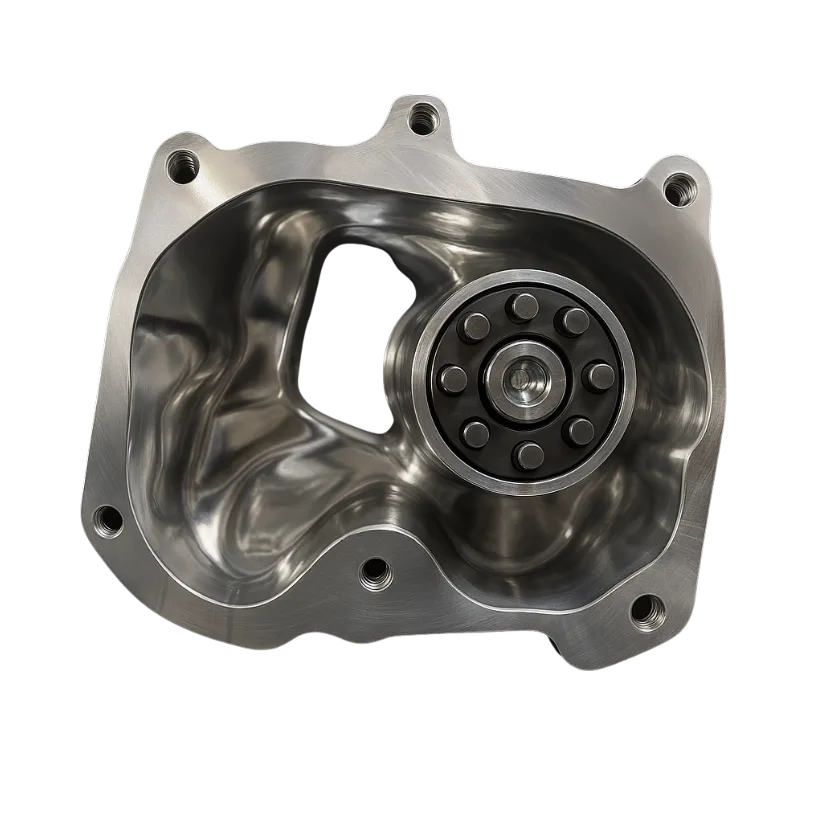
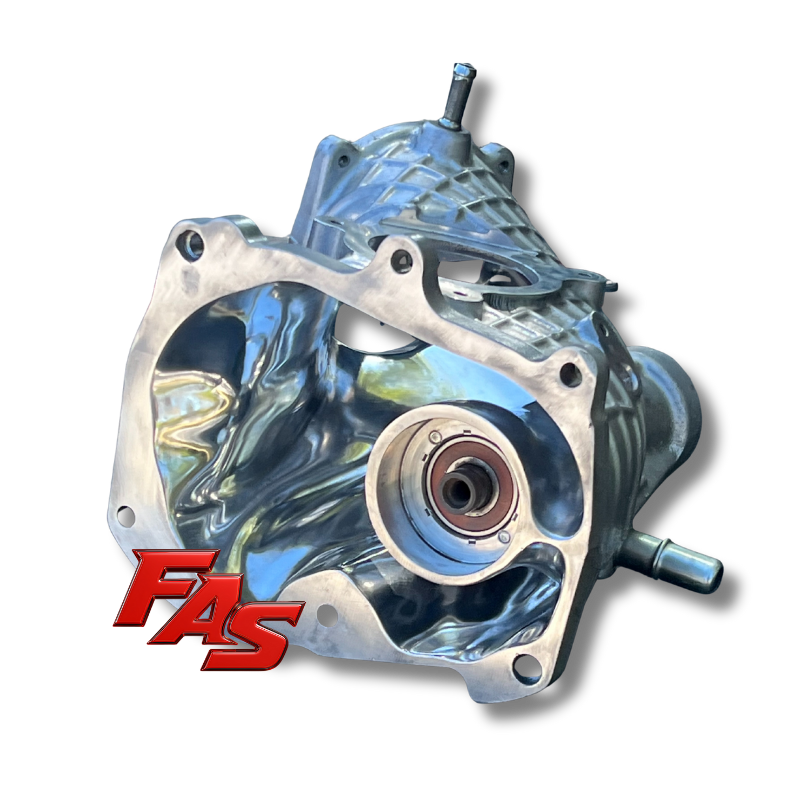
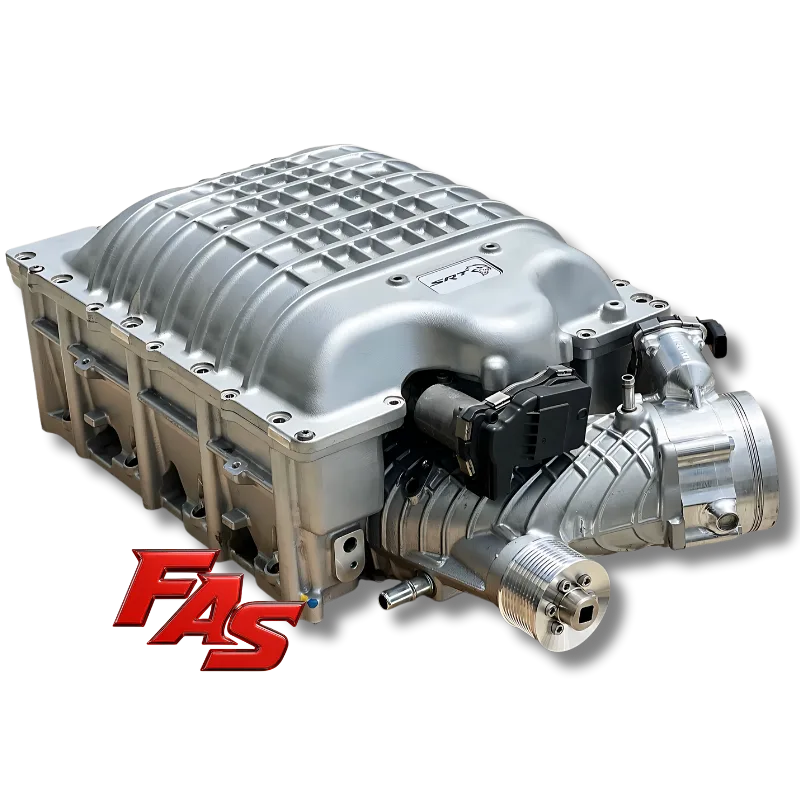
Snout porting removes material from the inlet section of the supercharger casting — the "snout" — to smooth and enlarge the bore where air enters before reaching the rotors. It is a permanent modification to the housing itself. Snout porting targets airflow restriction; it does not change how fast the rotors spin or how much boost the blower can generate. It unlocks the flow that restriction was costing you. For a full breakdown of the process and risks, see Snout Porting 101.
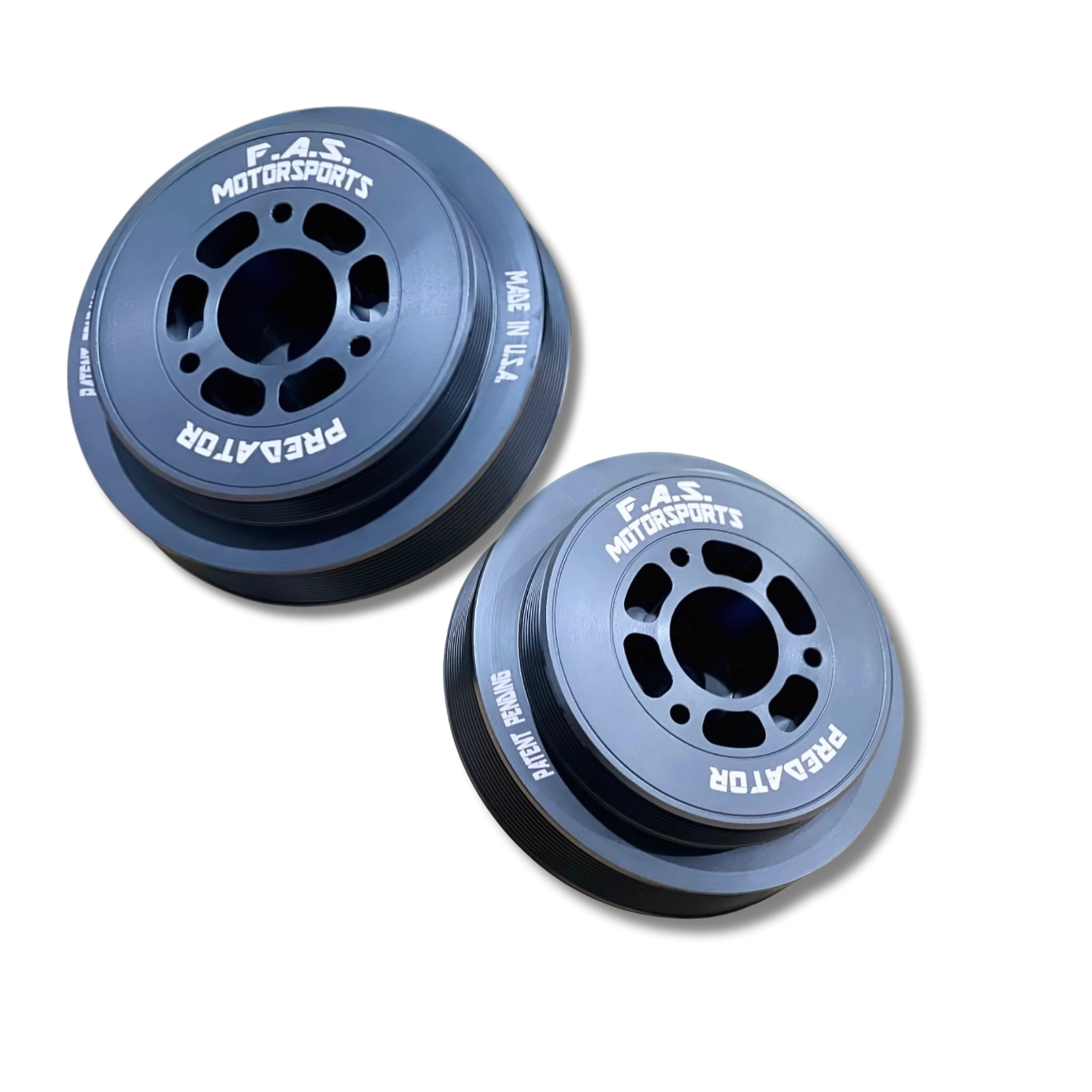
Upper pulley swap changes the drive ratio between the crankshaft and the supercharger rotor pack. The "upper" pulley is mounted on the supercharger nose itself. A smaller upper pulley relative to the lower pulley makes the rotors spin faster — generating more boost pressure at the same engine RPM. This is a direct lever on boost. It does not fix inlet restriction; it adds more demand on the inlet path you already have.
Lower pulley swap works the same drive ratio math from the crank end. A larger lower pulley achieves the same overdrive effect as a smaller upper pulley — the blower spins faster relative to the crankshaft. On some Hellcat platforms, packaging dictates which end makes more sense to change; mechanically, the effect is equivalent.
The Decision Chart: Match the Mod to Your Goal
The right first move depends on where your build is and what you are trying to accomplish. Here is the breakdown by goal.
Goal: Street / daily driver, maximum heat soak resistance, consistent back-to-back pulls → Start with snout porting. A ported snout moves air more efficiently and runs cooler inlet temperatures. That means your second and third run looks close to your first — which matters far more on the street than peak boost numbers. Add a pulley after the inlet is sorted and the tune supports it.
Goal: Track / drag strip, maximum peak power, single-pass performance → Depends on your current inlet stack. If you are already running an upgraded inlet elbow, larger throttle body, and a custom tune, and still seeing boost taper above 5,500 RPM — port the snout first. If your inlet path is still stock, a smaller pulley will expose the restriction and you will plateau faster. Complete the inlet before spinning the blower harder.
Goal: TRX / Trackhawk, towing performance, sustained load under heat → Snout porting first, then inlet package, before touching a pulley. Sustained load — towing a trailer at 60 mph in July — creates the worst heat soak scenario. More boost from a smaller pulley makes the heat problem worse, not better. Better inlet efficiency keeps temperatures in check throughout a long pull.
Goal: Already running a smaller pulley — boost tapers, heat soaks, diminishing returns → Snout porting is your next move. You have already increased rotor demand beyond what the inlet can efficiently supply. Porting the snout — and verifying your inlet elbow and throttle body — feeds the faster-spinning rotors the air they need to maintain boost through the rev range.
Goal: Built engine, max power, going for a number → Do both, in sequence. Inlet elbow → throttle body → snout port → tune → then evaluate pulley. A serious build needs a sorted inlet before you start stacking boost. The tune should see the full inlet package before the pulley changes the equation.
Why Snout Porting Comes Before a Pulley for Most Builds
A smaller pulley is a multiplier. It makes the blower spin faster, which increases boost pressure — but it also makes the blower work harder to pull air through whatever restriction is already there. If your inlet is restricted, a smaller pulley amplifies that restriction. You get more boost at low RPM but the blower runs hotter, boost falls off harder at the top of the rev range, and heat soak hits faster.
Snout porting removes that restriction first. Now when you add a smaller pulley, the rotors are spinning faster through an inlet that can actually feed them. The boost builds cleaner, inlet temperatures stay lower, and the gains from the pulley are fully realized instead of being partially offset by the inlet bottleneck you left in place.
This is the core sequencing logic: fix the restriction before adding boost demand.
When a Pulley Can Make Sense First
There are a few legitimate scenarios where you might go pulley before snout port:
- You want a data baseline first. Some builders run a conservative small-pulley tune to establish a baseline, log the heat soak and boost curve data, and use that data to confirm the snout is the next constraint. This is methodical, not wrong.
- Your inlet stack is already sorted. If you are already running an upgraded inlet elbow and 90mm+ throttle body, a pulley makes more sense sooner — the snout is not the dominant restriction yet.
- Budget forces it. A pulley swap is often less expensive than professional snout porting when you factor in blower removal, port labor, and reinstall. A conservative pulley with a good tune is not a terrible intermediate step — but understand you are building on a foundation you will need to come back and fix.
Common Wrong Assumptions
"A smaller pulley always means more power." A smaller pulley means more boost. Whether that translates to more power depends on whether the inlet can feed the rotors, whether the tune supports the additional boost and heat, and whether the engine can handle it. Boost and power are not the same number.
"Snout porting adds boost." It does not change boost pressure directly. It reduces inlet restriction so the blower runs more efficiently — the rotor pack can pull more air volume with less effort, which improves power output, reduces heat, and extends the boost curve through the rev range.
"I can skip the tune and it will be fine." No snout port or pulley swap should run on the factory tune. The factory calibration was written for a specific airflow profile and specific boost targets. Both mods change airflow characteristics in ways the factory tune cannot compensate for. Running the stock tune after either modification means fueling, timing, and boost control are all calibrated to an inlet that no longer exists.
"Lower pulley is always better than upper pulley." The mechanical effect is equivalent — you are changing the drive ratio from different ends. Platform, packaging, and tuner preference typically determine which end makes more sense. There is no universal winner.
The Recommended Sequence for Most 2.4L Hellcat Builds
If you want to do this right, this is the sequence:
- Inlet elbow upgrade + 90mm or 95mm throttle body. Opens the inlet path from the airbox to the snout. This is the highest dollar-per-horsepower step in the inlet system.
- Custom tune for the inlet changes. Log data and verify the baseline. Identify whether boost is falling off at the top — that tells you if the snout is the next constraint.
- Snout port. With the elbow and throttle body already open, the snout is the exposed bottleneck. Port it, get a retune to the new airflow profile.
- Evaluate pulley. Now you have a clean inlet path from airbox to rotor. A smaller pulley now spins the blower faster through an unrestricted inlet — and you will see the full gain from the pulley because the inlet is no longer choking it.
Frequently Asked Questions
Can I do snout porting and a pulley at the same time?
Yes — but they should both go into one comprehensive retune session, not two. Doing them together means the tuner calibrates to the full inlet and boost package in one pass, which is cleaner than retuning twice.
Does snout porting void my warranty?
Snout porting is a permanent, visible modification to the supercharger housing. Any dealership warranty review involving the blower will flag it immediately.
Does a pulley swap require a tune?
Yes. A pulley swap changes boost pressure, which changes the airflow and fueling demands the factory tune was written around. Running a smaller pulley on the factory tune is how you end up with detonation.
What about the 2.7L supercharger — does it need snout porting?
The 2.7L has a larger factory inlet opening than the 2.4L, so the restriction differential is smaller. Snout porting exists for 2.7L housings but the gains are more modest. The 2.4L is the primary candidate for this work.
How much does snout porting cost vs. a pulley swap?
Professional snout porting typically runs $300–$600 including blower removal, port work, surface finishing, and reinstall. Pulley swaps vary by platform and include the pulley cost plus install labor. Both require a retune, which is often the larger line item. Contact FAS Motorsports for current pricing.
Can I do a pulley swap without removing the blower?
Upper (supercharger) pulley swaps require removing the blower to access the nose shaft. Lower (crankshaft) pulleys can typically be changed with the engine in the car, though access varies by model year and platform.
How do I know if snout restriction is my bottleneck vs. something else?
The clearest indicators are boost falloff above 5,500 RPM despite adequate pulley sizing, excessive heat soak on back-to-back pulls, and diminishing returns from other inlet mods. If you have already run an upgraded inlet elbow and 90mm+ throttle body and still see these symptoms, the snout is the next bottleneck. See the full symptoms section in Snout Porting 101.
Does this apply to Trackhawk and TRX, or just Challengers and Chargers?
Both the Trackhawk (Grand Cherokee) and TRX (Ram 1500) run the 2.4L supercharger. The snout porting and pulley sequencing logic applies equally to these platforms — with the added note that sustained towing load makes heat soak management even more important, which is another argument for porting the snout before touching a pulley on these vehicles.
Is there a pulley size that is too small for a stock inlet?
Yes. Once rotor demand significantly exceeds what the inlet can flow, you cross into diminishing returns and increasing heat soak — more pulley does not produce proportionally more power. The specific threshold depends on your inlet package and fuel combination.
Will snout porting help on E85 or methanol injection?
Yes — fuel chemistry does not change the inlet restriction. If you are running E85 or methanol and pushing the blower hard, a ported snout reduces inlet temperatures and keeps the blower in a more efficient operating range, compounding the cooling benefit from the fuel.
Does the bypass valve need to be serviced when porting?
The bypass valve sits inside the snout casting and should be inspected whenever the blower is off the car. It is not part of the porting procedure, but since the blower is already removed, it is the right time to verify the valve seats and moves freely. A stuck or slow bypass valve costs power and can trigger detonation.
Not sure where your build sits in this sequence? Contact FAS Motorsports — we can walk through your current build, identify the next constraint, and tell you exactly which mod belongs first.
See also: Hellcat ported snout — full porting process, real-world gains, and pricing at FAS Motorsports.
Related Posts
Hellcat Supercharger Porting Explained: What It Does and When You Need It
If you're pushing a Hellcat, TRX, or Trackhawk past 700 whp, you've probably asked about supercharger porting — here's what it is & if it's right for you.
Hellephant C170 Engine: What It Is, What It Makes, and What It Costs
The Dodge Hellephant C170 crate engine makes 1,000 hp and 950 lb-ft from 426 cubic inches. What it is, what it costs, and what a complete build runs.
LT4 & Hellcat Supercharger Porting: FAS Porting Process, Gains & What It Costs
LT4 (C7 Z06, ZL1), 2.4L Hellcat TVS, and 2.7L IHI supercharger porting done in-house. Precision CNC port work, flow-bench verified, shipped back in 3–5 business days from Punta Gorda, FL.