ProCharger vs Supercharger: What's the Real Difference?
ProCharger vs Supercharger: What’s the Real Difference?
You’ll hear “ProCharger” and “supercharger” thrown around in the same breath constantly. They’re not the same thing. A ProCharger is a supercharger — specifically a centrifugal supercharger made by ProCharger (a brand name). The confusion happens because “supercharger” covers an entire category of forced induction, and ProCharger dominates one slice of it.
Here’s how they actually differ, and why it matters for your build.
What Is a Supercharger?
A supercharger is any air compressor driven by the engine (as opposed to a turbocharger, which is driven by exhaust gas). They all do the same job — force more air into the combustion chamber so you can burn more fuel and make more power — but the mechanism is different.
There are three main supercharger types:
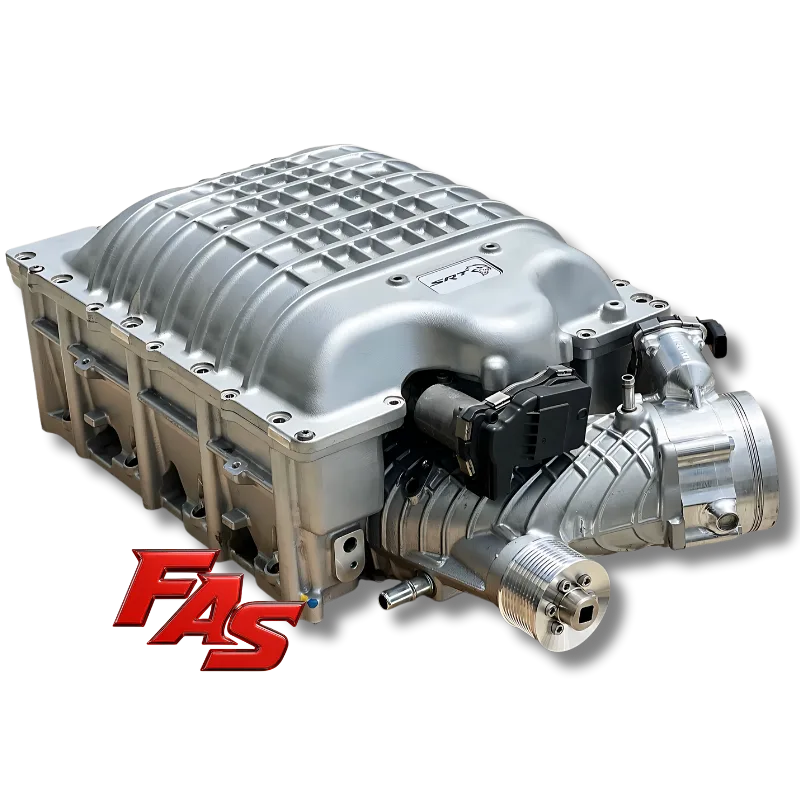
- Roots (positive displacement) — twin rotors mesh and push air in discrete gulps. The Hellcat’s IHI blower is a modern twin-screw variant of this design.
- Twin-screw (positive displacement) — two counter-rotating helical screws compress air more efficiently than traditional Roots blowers. Less heat, better efficiency at high boost.
- Centrifugal — an impeller spins at high RPM and flings air outward into a volute, much like a turbocharger but belt-driven. This is what ProCharger makes.
How Does a ProCharger Work?
A ProCharger uses a belt off the crankshaft to spin an impeller — typically 50,000–60,000 RPM. Airflow is velocity-based: the faster you spin it, the more boost it generates. That means ProCharger output scales heavily with engine RPM.
ProChargers are self-contained units with their own internal oiling system (on most models), which eliminates the need to tap into the engine oil system like some supercharger kits require.
Because they’re centrifugal, ProChargers produce heat similar to a turbocharger and almost always benefit from an intercooler. Without one, you’re fighting excessive intake temps that eat into the power gains.
ProCharger vs Positive Displacement: Power Curve
This is the key split, and it affects how the car feels on the street.
Positive displacement superchargers (like the IHI on a Hellcat) build boost immediately with engine rotation. At 1,500 RPM, you’re already making substantial boost. That means torque from the moment you roll into the throttle — which is why the Hellcat feels like it wants to spin the tires at 30 mph.
Centrifugal superchargers like ProCharger build boost progressively. At low RPM there’s minimal boost. The power curve climbs sharply toward the top of the rev range. This makes them popular for high-revving engines or drag strip applications where you’re operating consistently at high RPM.
For street driving, most enthusiasts prefer the instant response of positive displacement. For all-out power at peak RPM — particularly on lighter cars that can hook — centrifugal has advantages.
Heat Comparison
Positive displacement blowers inherently heat the air more because they compress it directly inside the rotor case. Automakers solve this with an integral intercooler — the heat exchanger sitting on top of the Hellcat’s intake manifold is doing exactly this.
Centrifugal superchargers like ProCharger move the compression event to a remote location (the ProCharger head unit mounted at the front of the engine). They still heat the air, but routing through a front-mounted air-to-air intercooler is straightforward and they tend to run slightly cooler than roots-type units at equivalent boost levels.
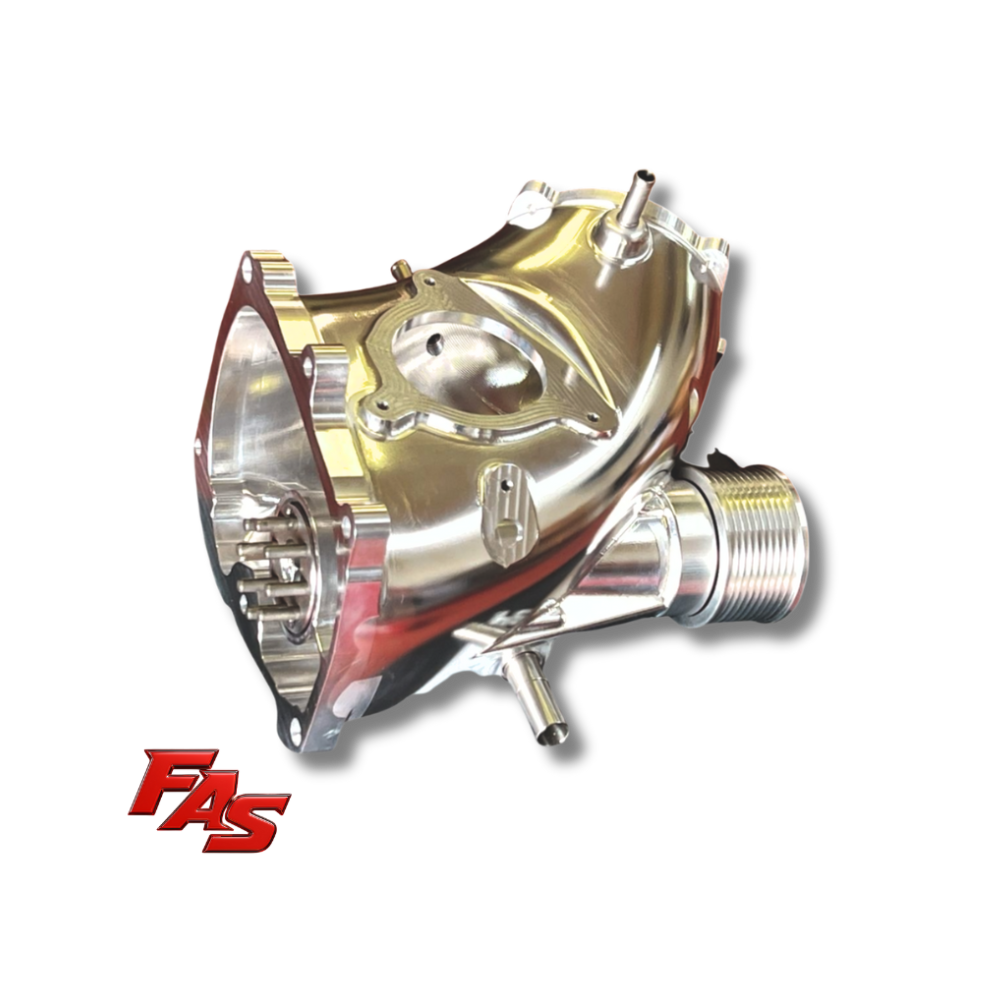
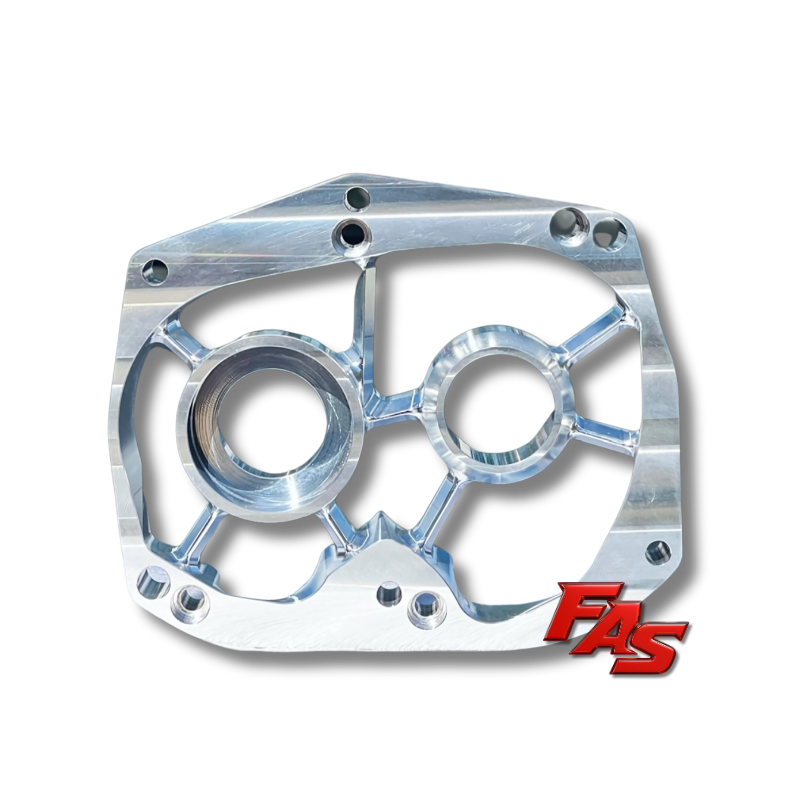
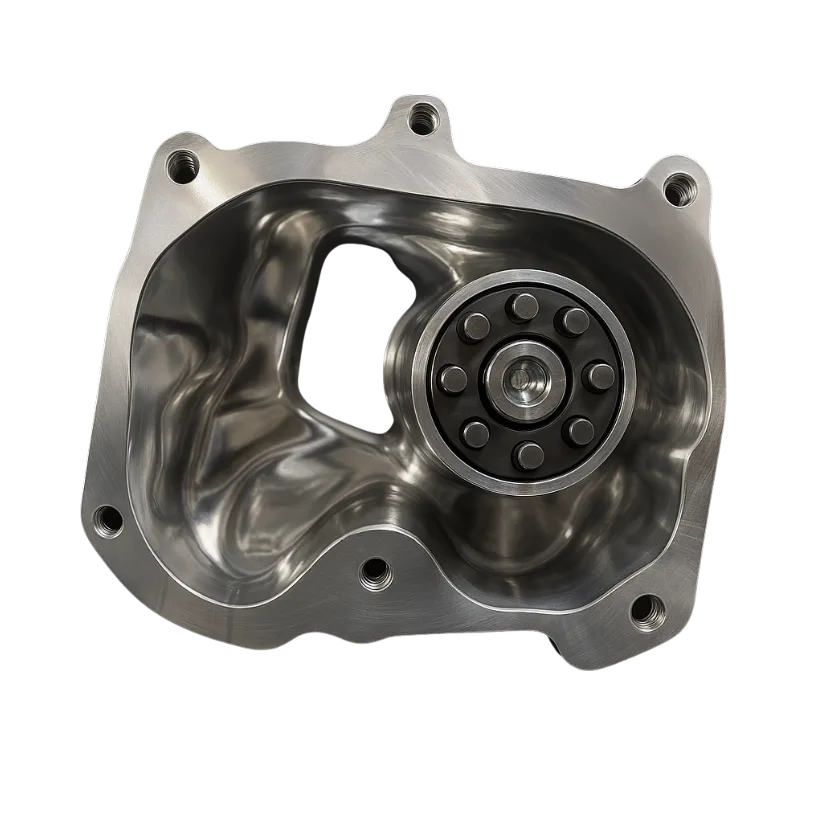
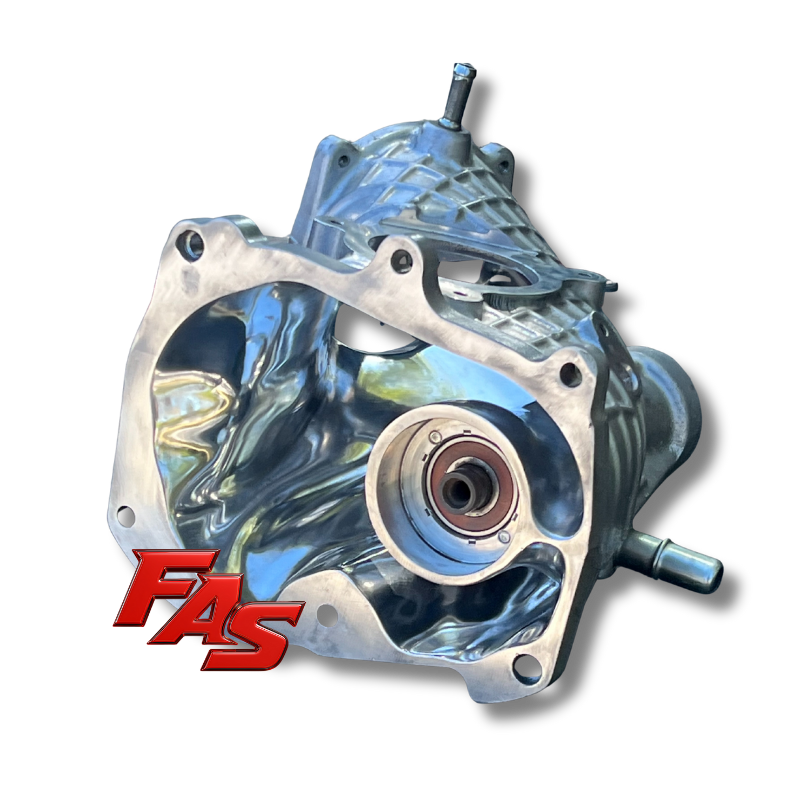
On the Hellcat/Demon platform with the stock liquid-to-air intercooler, heat management at higher boost is still achievable — it’s a factor, but not a dealbreaker. FAS’s ported blowers improve airflow efficiency, which also reduces heat generation at the same boost levels.
Which Is Better?
Neither is universally better. The right answer depends on your platform, goals, and driving style.
ProCharger advantages:
- Strong peak power numbers
Related Posts
Hellcat Supercharger Porting Explained: What It Does and When You Need It
If you're pushing a Hellcat, TRX, or Trackhawk past 700 whp, you've probably asked about supercharger porting — here's what it is & if it's right for you.
Hellephant C170 Engine: What It Is, What It Makes, and What It Costs
The Dodge Hellephant C170 crate engine makes 1,000 hp and 950 lb-ft from 426 cubic inches. What it is, what it costs, and what a complete build runs.
LT4 & Hellcat Supercharger Porting: FAS Porting Process, Gains & What It Costs
LT4 (C7 Z06, ZL1), 2.4L Hellcat TVS, and 2.7L IHI supercharger porting done in-house. Precision CNC port work, flow-bench verified, shipped back in 3–5 business days from Punta Gorda, FL.