6.7L Powerstroke Piping Kits: What's Available and Why They Matter for Your Super Duty
6.7L Powerstroke Piping Kits: What’s Available and Why They Matter for Your Super Duty
The 6.7L Powerstroke is a fundamentally capable turbocharged diesel. Ford has refined it through multiple generations, and in factory tune it’s efficient, powerful, and reasonably tuner-friendly. But like any forced-induction platform built to a price point, it leaves airflow efficiency on the table.
The intercooler piping is one of the first places that efficiency lives — and one of the first things worth addressing on any 6.7L performance build.
What the Factory Piping Does (and Doesn’t Do)
The 6.7L Powerstroke uses a charge air cooler (intercooler) mounted in the front of the truck. Hot compressed air from the turbocharger travels through a series of pipes and tubes to reach the intercooler, cools down, and then continues to the intake manifold.
Ford’s factory piping is engineered to cost targets and fits within packaging constraints for a full-size work truck. The material is typically plastic (intake-side) and aluminized steel (charge-side), designed around emissions compliance and ease of assembly — not maximum airflow.
For stock output and moderate towing, the factory piping is adequate. For any meaningful performance modification — even just a tune — the factory piping becomes a restriction.
What restricts airflow in the factory setup:
- Smaller-than-optimal internal diameter
- Plastic intake piping that can crack under heat cycling
- Routing bends that create turbulence and reduce charge efficiency
- Factory couplers (silicone boots) that can collapse under boost
What an Aftermarket Piping Kit Provides
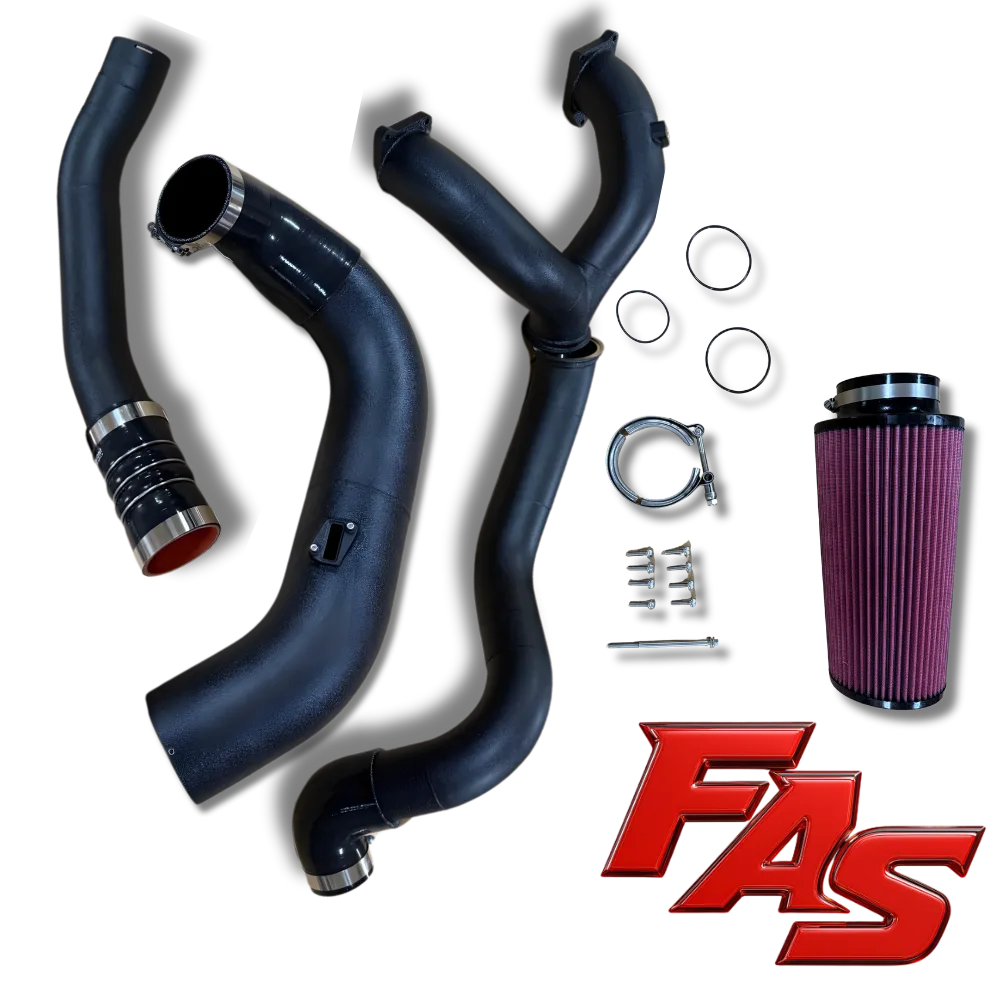
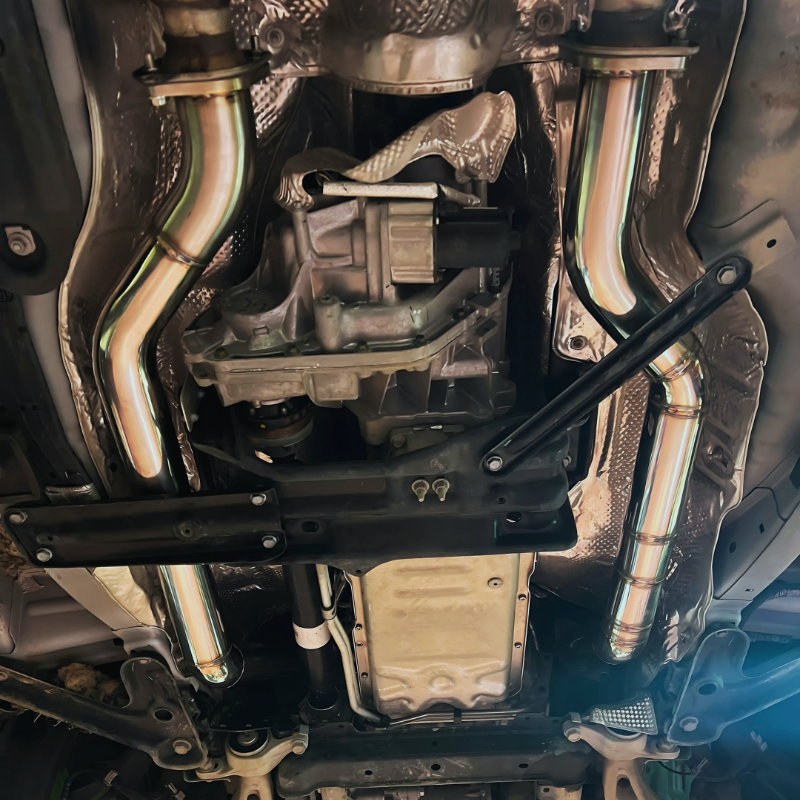
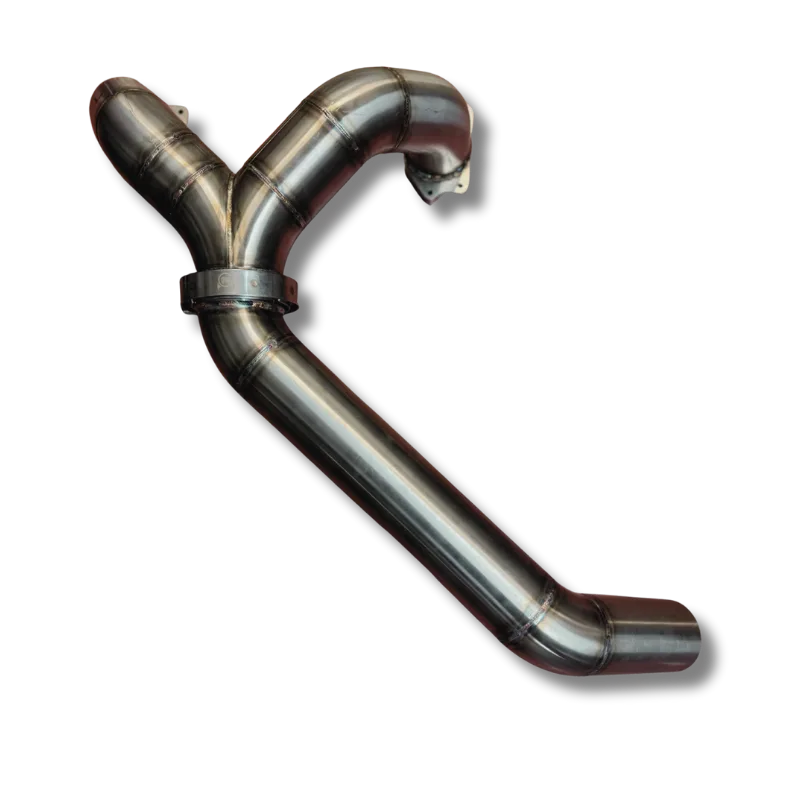
A quality aftermarket intercooler piping kit for the 6.7L Powerstroke replaces the factory charge piping with:
- Larger diameter tubing — typically 3.0" to 3.5" ID depending on the kit and power level target
- Mandrel-bent aluminum or stainless steel — consistent inner diameter through the bends, no crushing or collapse
- Heavy-duty silicone couplers — reinforced, multi-layer construction that holds boost pressure without ballooning
- T-bolt clamps — proper clamp-down that doesn’t loosen over heat cycles
The result is less restriction, lower charge air temperatures, and more consistent boost delivery to the intake manifold.
What Powerstroke Years Need Piping Work?
Related Posts
Hellcat Supercharger Porting Explained: What It Does and When You Need It
If you're pushing a Hellcat, TRX, or Trackhawk past 700 whp, you've probably asked about supercharger porting — here's what it is & if it's right for you.
Hellephant C170 Engine: What It Is, What It Makes, and What It Costs
The Dodge Hellephant C170 crate engine makes 1,000 hp and 950 lb-ft from 426 cubic inches. What it is, what it costs, and what a complete build runs.
LT4 & Hellcat Supercharger Porting: FAS Porting Process, Gains & What It Costs
LT4 (C7 Z06, ZL1), 2.4L Hellcat TVS, and 2.7L IHI supercharger porting done in-house. Precision CNC port work, flow-bench verified, shipped back in 3–5 business days from Punta Gorda, FL.