LS Supercharger Kit Buyer's Guide: What to Know Before You Buy
LS Supercharger Kit Buyer’s Guide: What to Know Before You Buy
The LS platform is arguably the most force-inducted engine family in American performance. Centrifugal superchargers, positive displacement blowers, twin-screw systems — all of it has been bolted to LS engines in every configuration imaginable. The kit market reflects that: there are hundreds of options, and the price range runs from budget bolt-ons to serious race builds.
Buying the wrong kit for your goals is an expensive mistake. Here’s how to sort it out.
What’s Actually in an LS Supercharger Kit
A complete supercharger kit (not a bare head unit or blower assembly) should include:
- The supercharger itself — head unit (centrifugal), positive displacement blower assembly, or twin-screw unit
- Intake manifold (for positive displacement kits — most require a specific manifold)
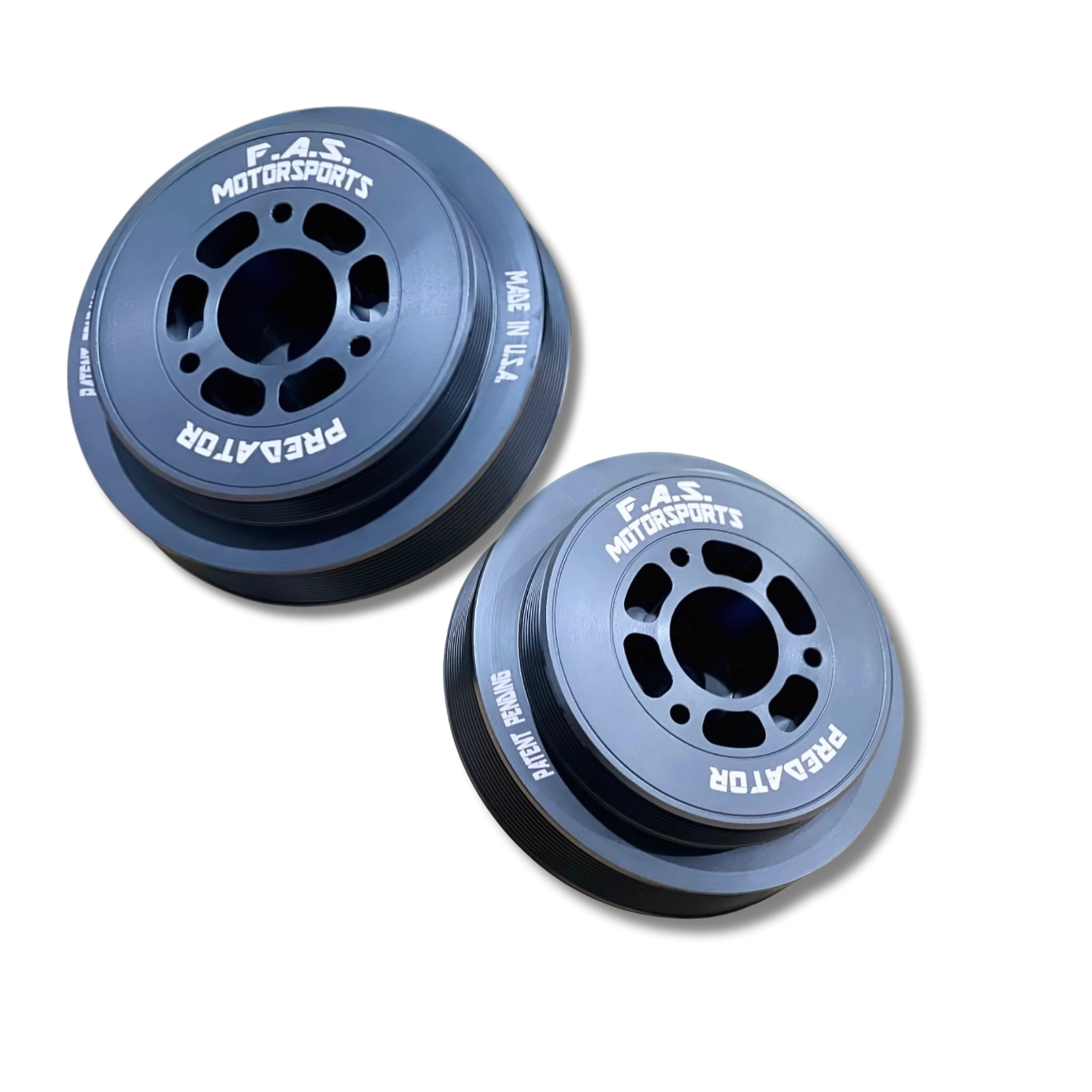
- Drive system — crank pulley, supercharger pulley, belt, tensioner
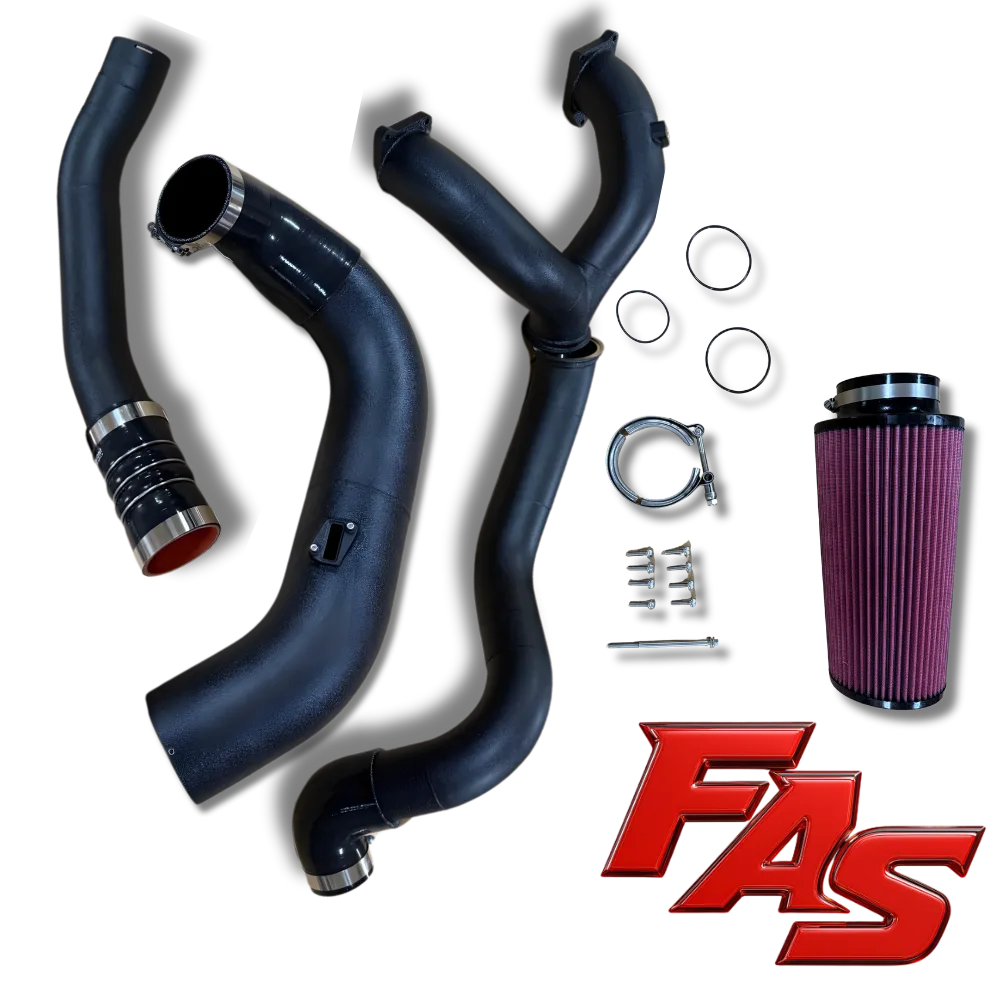
- Intercooler — either integral (inside the manifold) or front-mount
- Charge piping and throttle body adapter
- Fuel system hardware — fuel rails, injectors (on comprehensive kits), or fuel injector upgrade recommendations
- Tuning instructions or tune file — this is where budget kits cut corners
If a kit doesn’t include provisions for fuel and a tune, that’s not a turn-key solution — it’s the start of a multi-vendor project.
LS Displacement Matters: 5.3 vs 6.0 vs 6.2
Not all LS engines respond identically to boost, and not all kits fit all displacements.
5.3L LS (truck engines — L59, LM7, LC9, etc.) — The most common LS engine in the wild due to F-body trucks. It makes excellent power per dollar boosted because it’s already nearly cubic-inch-matched to many 6.0 builds. The 5.3 is more prone to spinning bearings under aggressive boost without proper supporting mods. On a budget build, keep boost under 8–10 psi on a stock shortblock. If you want to push harder, a forged rotating assembly is the path.
6.0L LS (LS2, L76, LQ9, L96) — More displacement, better base power, commonly found in truck swaps. Better platform for more aggressive boost levels. Often the sweet spot for a boosted LS swap.
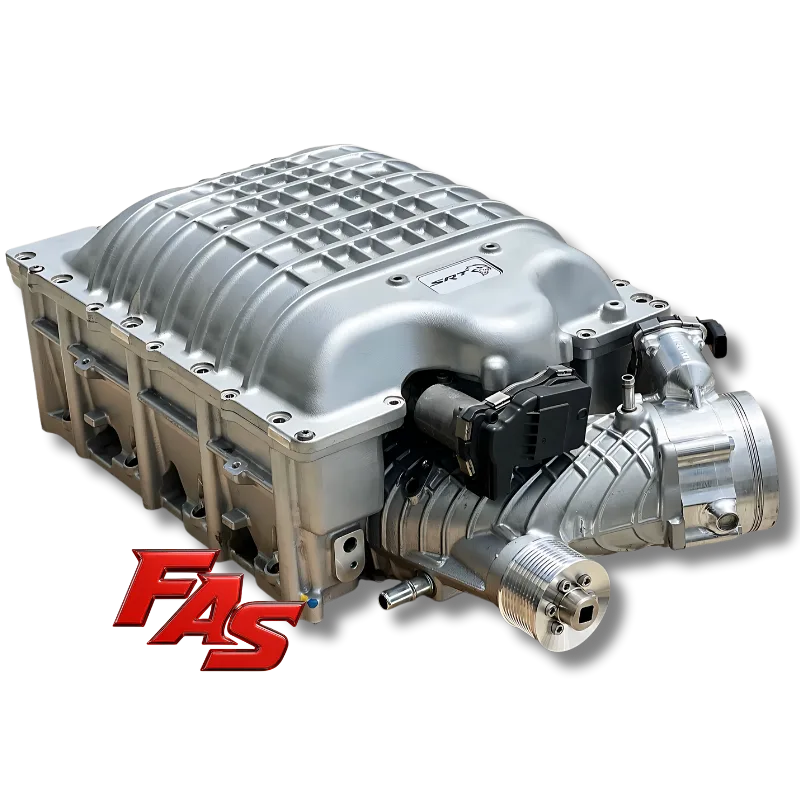
6.2L LS3/L99/LSA — The performance variant. LS3 in C6/Camaro, L99 in auto Camaros, LSA in ZL1/CTS-V. The LSA already came supercharged from the factory (Eaton TVS1900). Porting options exist for the factory LSA blower. For the LS3, centrifugal kits are extremely popular.
When shopping kits, verify the kit explicitly supports your displacement and casting. Generic “LS” fitment claims sometimes mean LS1/LS2 and don’t account for later Gen IV variations in the valley plate or intake ports.
Kit Types: Centrifugal vs Positive Displacement
Centrifugal (ProCharger, Vortech, Paxton)
Most popular choice for street/strip LS builds. The head unit bolts to the front of the engine using a bracket kit — no changes to the intake manifold. Power builds with RPM, making the car feel more like a naturally aspirated engine at low speeds and progressively more aggressive up top.
Common options:
- ProCharger P-1SC-1 or D-1SC: most popular for street builds
- Vortech V-3 Si: similar market, slightly different head unit design
- Paxton Novi 1200: another popular option with good street manners
All three require an intercooler and produce power that scales sharply in the upper RPM range.
Positive Displacement (Magnuson TVS2300, Whipple)
For builds that want flat torque from low RPM — the feel of a factory supercharged car rather than a turbo-like power surge. These kits require an intake manifold swap, which adds cost and complexity but results in a more integrated appearance and better low-RPM behavior.
Popular choices:
- Magnuson TVS2300: excellent OEM-style integration, good for street builds
- Whipple 2.9L: more aggressive, suited for higher-power builds
Expect to pay $1,500–$3,000 more for a positive displacement kit vs a centrifugal unit of similar power output, largely due to the manifold.
Power Expectations by Boost Level
These are approximate figures for pump gas on a healthy, stock-displacement LS:
| Boost Level | Crank HP Gain | Notes |
|-------------|---------------|-------|
| 6–8 psi | +100–150 hp | Safe zone for stock bottom end |
| 9–12 psi | +150–220 hp | Starts pushing limits of stock internals on 5.3 |
| 13–16 psi | +230–320 hp | Forged rotating assembly recommended |
| 17+ psi | 400+ hp gain | Race shortblock territory |
These numbers move based on cam, heads, exhaust, and tune quality. A well-tuned kit will outperform a poorly-tuned kit at the same boost level by a significant margin.
The Tuning Requirement
No LS supercharger kit is truly plug-and-play. The ECU needs to account for increased airflow, adjusted fuel demands, and modified ignition timing under boost. A bad tune will either leave power on the table or cause engine damage.
Tuning options:
- Mail-order tune from the kit manufacturer (included in some comprehensive kits)
- Local dyno tune — best results, most expensive
- HP Tuners or EFI Live self-tune — for experienced users only
Budget $400–$800 for a quality dyno tune if not included in the kit. This is not where to cut costs.
Supporting Mods to Plan For
Before bolting on boost, assess:
- Fuel injectors: Stock LS injectors (28 lb/hr on most trucks) max out quickly under boost. 60–80 lb/hr injectors are common upgrades.
- Fuel pump: Returnless systems on LS trucks often can’t keep up at higher boost. A Walbro 255 or equivalent in-tank pump is a common fix.
- Cold air intake: The supercharger breathes through whatever intake is upstream. A quality cold air kit is cheap power.
- Headers and exhaust: Not strictly required but leaves power on the table if ignored on aggressive builds.
- Spark plugs: Step colder under boost. One heat range colder is typically recommended.
What to Budget
| Kit Type | Kit Cost | Install + Tune | Total Budget |
|----------|----------|----------------|--------------|
| Entry centrifugal | $2,500–$3,500 | $600–$1,200 | $3,100–$4,700 |
| Mid-range centrifugal | $3,500–$5,000 | $800–$1,500 | $4,300–$6,500 |
| Positive displacement | $5,000–$8,000 | $1,000–$2,000 | $6,000–$10,000 |
Add supporting mods (fuel, plugs, intake) to any of these budgets.
Bottom Line
The LS platform handles boost exceptionally well when the build is done right. Match the kit type to your power delivery preference — centrifugal for that top-end pull, positive displacement for low-RPM torque. Match the boost level to your engine’s bottom end, budget the tune, and don’t skip the fuel system.
For LS platform builds or any questions about forced induction options, reach out to the FAS Motorsports team. We work across multiple platforms and can help you pick the right path before you commit.
Which LS Supercharger Kit Platform Is Right for You?
Before you buy, think through how you’ll actually use the truck. Street driver, occasional strip, or tow rig — the answer changes which kit and which support level makes sense.
FAS Motorsports works across the full LS supercharger ecosystem:
- Complete supercharger kit installs
- LSA blower rebuilds and refresh services
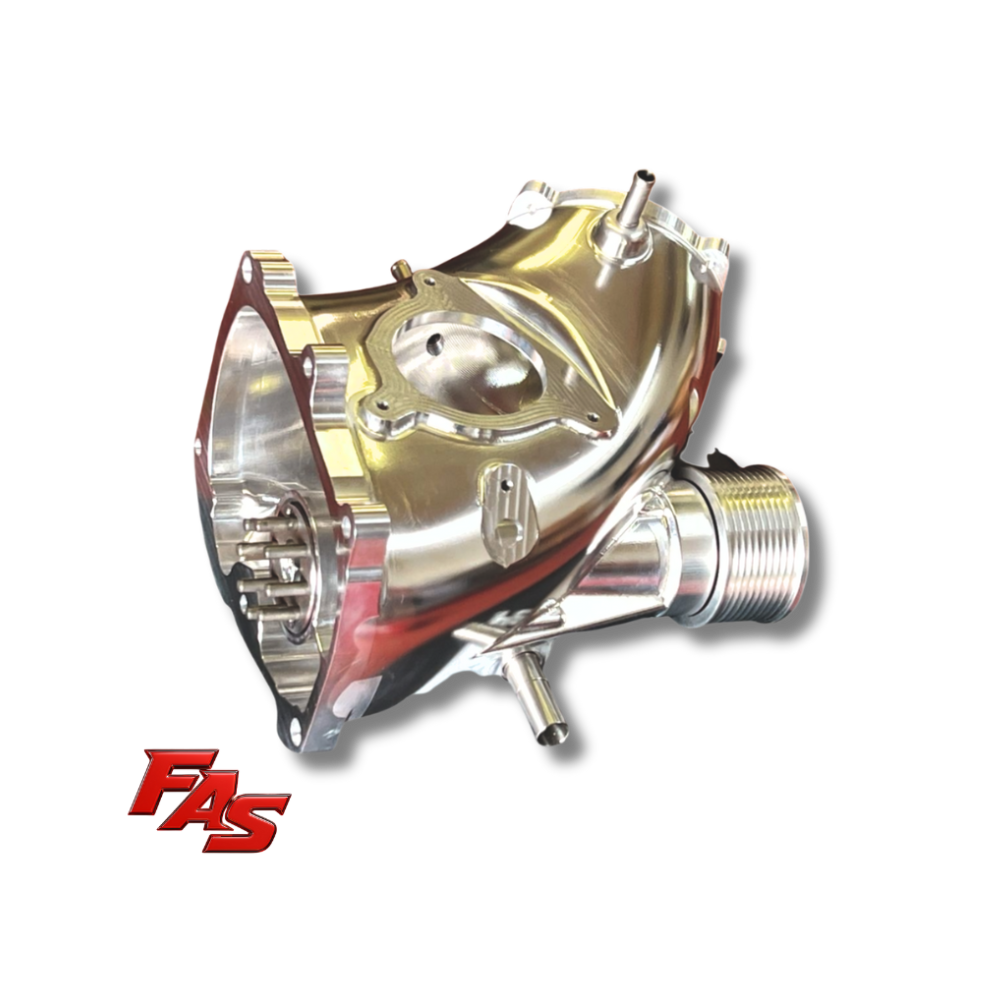
- Precision porting for M112/M122 units
- Intercooler and cooling upgrades for tow-duty and heavy-use applications
Want platform-specific recommendations for Silverado, Tahoe, Escalade, or Camaro ZL1 builds? Check out the LS Supercharger upgrade guide to match the right hardware and support level to your goals.
Related Posts
Hellcat Supercharger Porting Explained: What It Does and When You Need It
If you're pushing a Hellcat, TRX, or Trackhawk past 700 whp, you've probably asked about supercharger porting — here's what it is & if it's right for you.
Hellephant C170 Engine: What It Is, What It Makes, and What It Costs
The Dodge Hellephant C170 crate engine makes 1,000 hp and 950 lb-ft from 426 cubic inches. What it is, what it costs, and what a complete build runs.
LT4 & Hellcat Supercharger Porting: FAS Porting Process, Gains & What It Costs
LT4 (C7 Z06, ZL1), 2.4L Hellcat TVS, and 2.7L IHI supercharger porting done in-house. Precision CNC port work, flow-bench verified, shipped back in 3–5 business days from Punta Gorda, FL.