Hellcat Supercharger: Complete Guide to Rebuilds, Porting & Upgrades
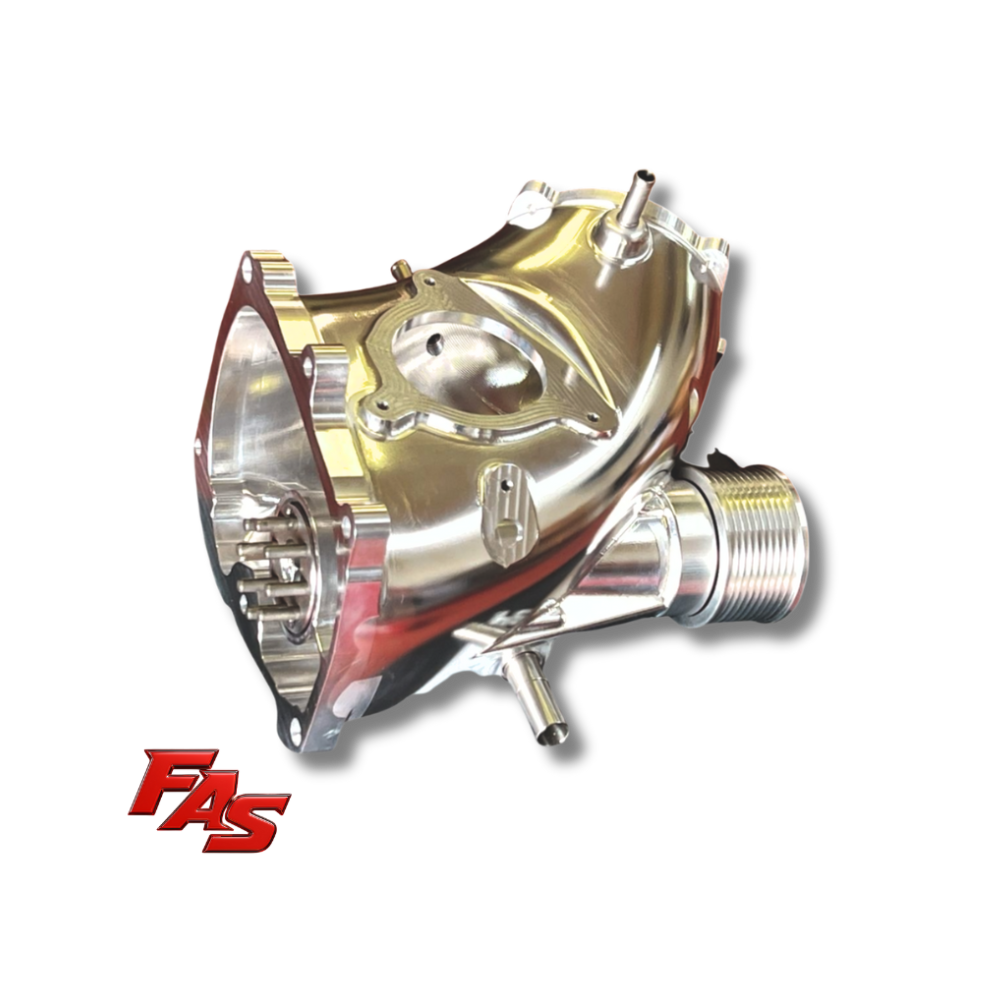
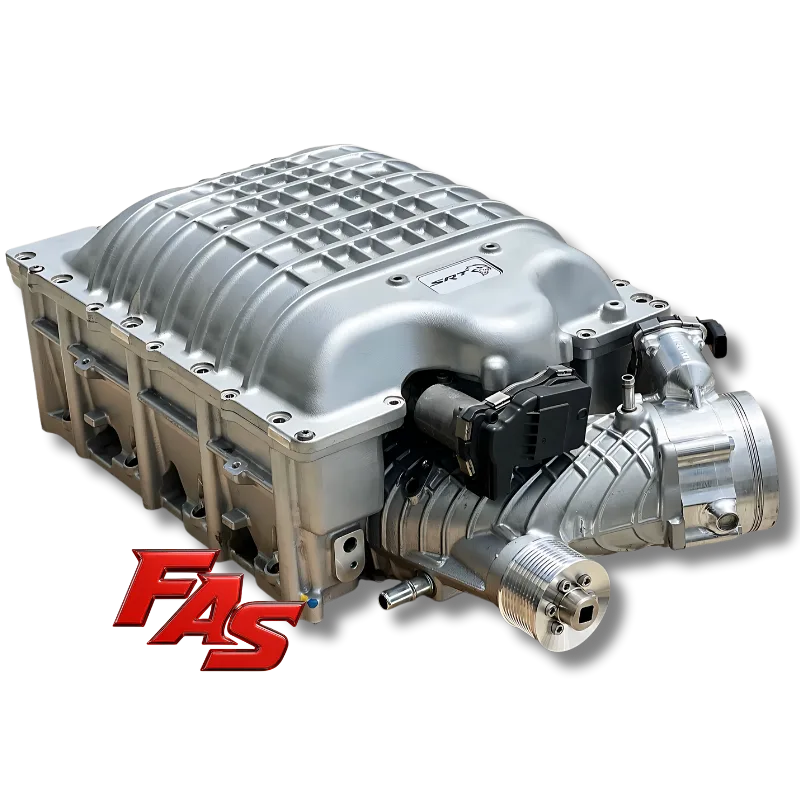
The Hellcat supercharger is the heart of Dodge’s most powerful production engines — a Roots-type twin-screw 2.4L TVS (Twin Vortices Series) blower force-fed through the center of the 6.2L HEMI. From the factory it produces 11.6 psi of boost and is responsible for the SRT Hellcat’s 707 HP, the Redeye’s 797 HP, and the Trackhawk’s 707 HP output.
If you own a Hellcat platform — Challenger, Charger, Durango, or Grand Cherokee Trackhawk — and you’re thinking about more power, better longevity, or dealing with a failing blower, this guide covers everything: how the supercharger works, what breaks, when to rebuild versus replace, what porting actually does, and what the real upgrade path looks like.
What Is the Hellcat Supercharger?
The Hellcat uses an Eaton TVS 2300 (commonly called the 2.4L) positive-displacement Roots-type supercharger. “TVS” stands for Twin Vortices Series — Eaton’s four-lobe rotor design that creates a vortex during compression, reducing heat buildup and improving efficiency compared to older three-lobe designs.
Key specs:
- Displacement: 2.4 liters per revolution
- Rotor design: 4-lobe helical twist (160° twist angle)
- Drive ratio: Belt-driven off the crankshaft
- Bypass valve: Integral — opens at idle/low throttle to reduce parasitic drag
- Intercooler: Air-to-liquid heat exchanger mounted on top of the blower
- Factory boost: ~11.6 psi (Hellcat), ~14.5 psi (Redeye)
The supercharger sits in the valley of the engine, sealed to the intake manifold. The rotors spin inside a precision-machined housing, compressing air and pushing it into the engine under pressure. Tight rotor-to-housing clearances are what create boost — and what wear out over time.
How Long Does a Hellcat Supercharger Last?
Stock Hellcat superchargers are generally reliable under normal use. Most owners see 80,000–120,000 miles before notable wear, though the number varies widely based on how the car is driven.
What kills them faster:
- High-boost or high-horsepower tuning — pushing more boost accelerates rotor tip wear
- Pulley swaps without supporting mods — a smaller pulley without proper fueling and timing correction generates heat and stress
- Oil contamination — supercharger oil breaks down; if the blower has never been relubricated, the front bearing takes the damage first
- Track use — sustained WOT pulls at high RPM push any blower harder than street driving
Signs your Hellcat supercharger is failing:
- Whining or grinding noise from the blower (front bearing or rotor tip contact)
- Boost dropping off — a healthy blower holds consistent numbers; a worn one falls off under load
- Excessive heat — inlet air temperatures spiking more than usual
- Visible damage: scoring on rotor lobes, pitting on housing bore
Related Posts
Hellcat Supercharger Porting Explained: What It Does and When You Need It
If you're pushing a Hellcat, TRX, or Trackhawk past 700 whp, you've probably asked about supercharger porting — here's what it is & if it's right for you.
Hellephant C170 Engine: What It Is, What It Makes, and What It Costs
The Dodge Hellephant C170 crate engine makes 1,000 hp and 950 lb-ft from 426 cubic inches. What it is, what it costs, and what a complete build runs.
LT4 & Hellcat Supercharger Porting: FAS Porting Process, Gains & What It Costs
LT4 (C7 Z06, ZL1), 2.4L Hellcat TVS, and 2.7L IHI supercharger porting done in-house. Precision CNC port work, flow-bench verified, shipped back in 3–5 business days from Punta Gorda, FL.