Hellcat Supercharger on a 5.7 HEMI: Fitment Guide and What the Kit Requires
Hellcat Supercharger on a 5.7 HEMI: Complete Fitment Guide
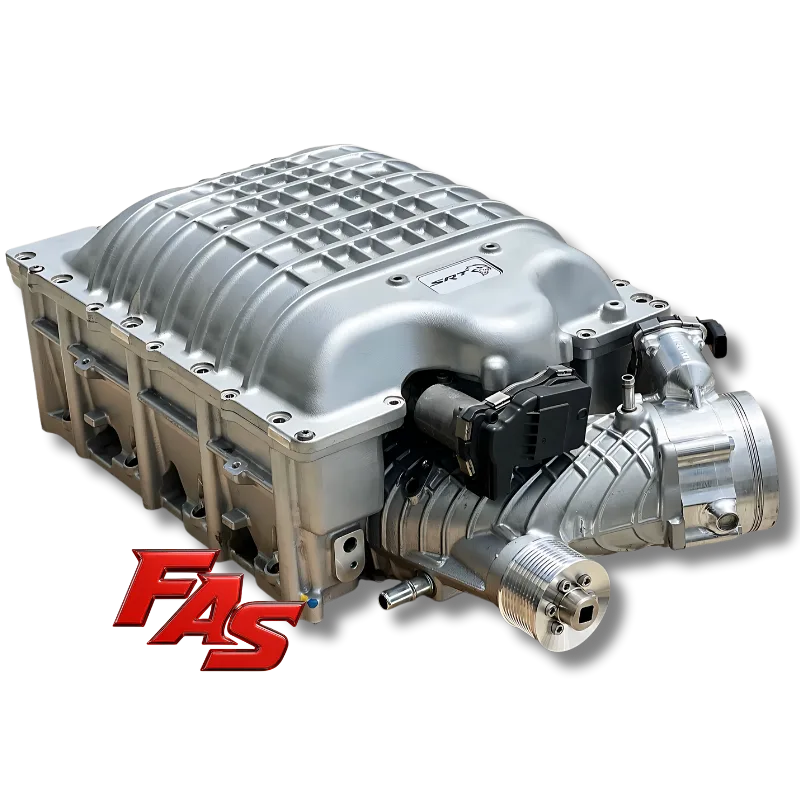
The 5.7 HEMI is a capable platform — 345–395 cubic inches of Mopar iron that responds well to boost. And the Hellcat’s 2.4L IHI supercharger, when sourced used, is one of the cheapest routes to meaningful twin-screw boost on any HEMI engine. The question is whether the 5.7 can physically fit and use the Hellcat blower — and what a proper kit looks like.
Does the Hellcat Supercharger Physically Fit a 5.7 HEMI?
Not bolt-for-bolt. The Hellcat 6.2L HEMI uses a specific intake manifold with a bolt pattern and port spacing matched to that engine. The 5.7 HEMI uses a different intake manifold and port layout. You need an adapter kit designed to bridge the two.
A proper Hellcat supercharger kit for a 5.7 HEMI includes:
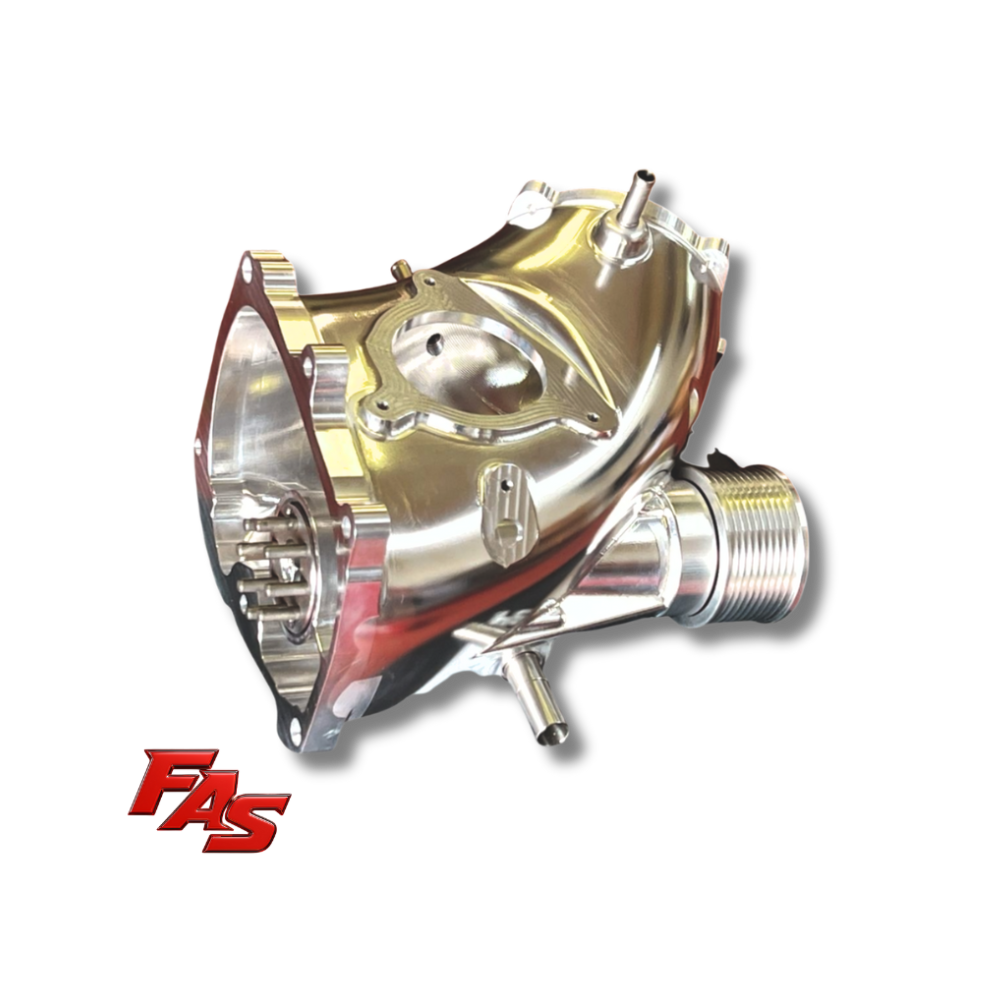
- Adapter plate or custom intake manifold — converts the Hellcat blower outlet to the 5.7’s port arrangement
- Drive relocation or snout modification — the blower’s drive engagement point may need repositioning to clear the 5.7’s accessory drive
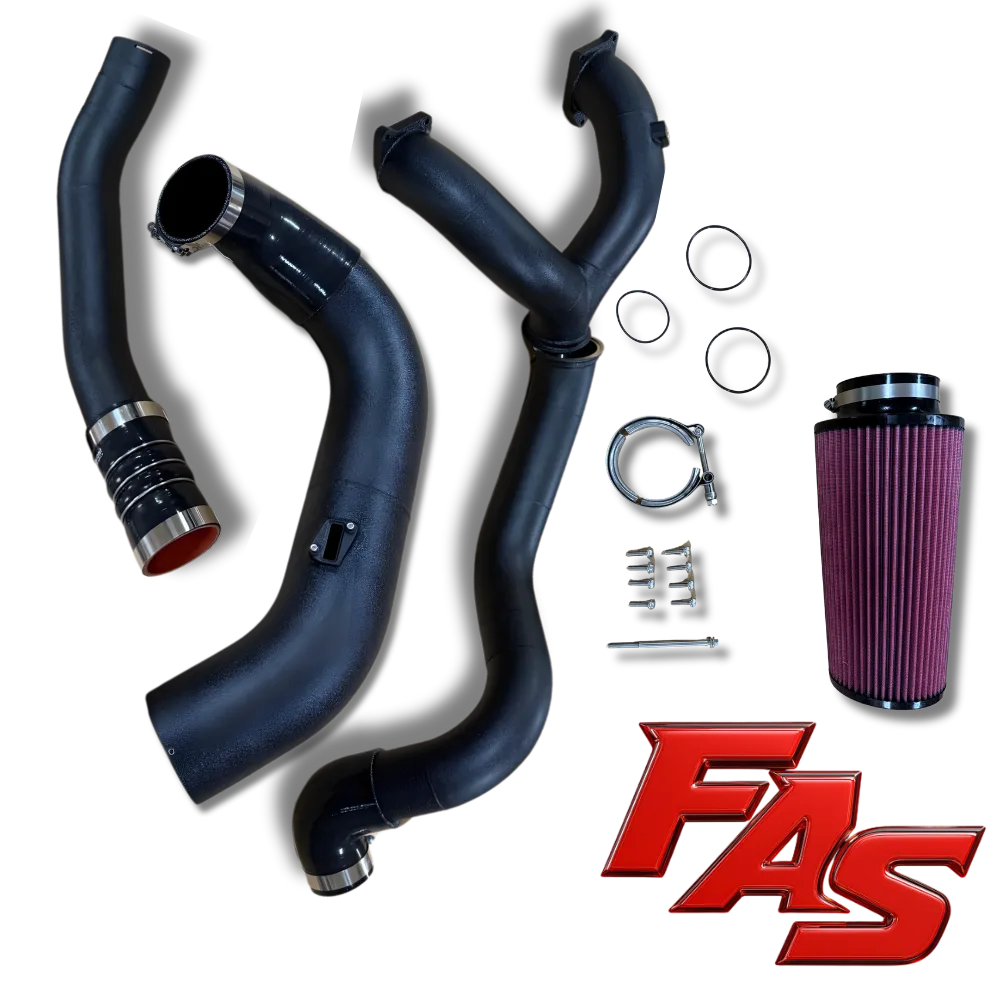
- Intercooler plumbing — the Hellcat blower has a water-to-air intercooler built in; you’ll need a separate heat exchanger and circulation pump mounted in the engine bay
- Throttle body adapter — the Hellcat runs a large-bore throttle body that won’t match the 5.7’s stock throttle body mounting without an adapter
What Else Do You Need?
Beyond the physical adapter kit, a Hellcat supercharger on a 5.7 HEMI requires:
Fuel system upgrade. The stock 5.7 HEMI fuel injectors are sized for naturally aspirated operation. Under boost, you’ll need higher-flow injectors — typically 60–75 lb/hr depending on target power — plus a reliable in-tank pump (Walbro 450 or equivalent).
Custom ECU calibration. The PCM on a 5.7 HEMI needs to be recalibrated for boost. This means opening the boost table, adjusting fuel trims, retarding timing appropriately under boost, and disabling any detonation-based timing pull that would otherwise pull 8–10° under normal knock sensor operation. HP Tuners or a standalone ECU are both viable paths.
Stronger bottom end (power-level dependent). A stock 5.7 HEMI short block with factory rods is generally safe to about 500 whp on a conservative tune. Push past that and you’ll want forged pistons and rods. At 550+ whp, the block itself becomes a limiting factor.
Exhaust. Backpressure hurts boosted engines disproportionately. A true dual exhaust with high-flow cats or straight pipes from the collectors is worth doing before adding boost.
Realistic Power: 5.7 HEMI with Hellcat Supercharger
| Configuration | Boost | Est. Wheel HP |
|—|—|—|
| Stock 5.7, pump gas, conservative tune | 8–10 psi | 430–480 whp |
| Built 5.7 (forged), E85, ported blower | 12–14 psi | 575–650 whp |
| Stroked 5.7 (392 ci), E85, ported blower | 13–15 psi | 650–720 whp |
The 5.7’s smaller displacement vs the Hellcat’s 6.2L means it builds boost faster — but peak airflow and power are naturally lower on the smaller engine. Stroking to 392 ci or larger dramatically changes the equation.
Ported Hellcat Blower: Why It Matters on a 5.7
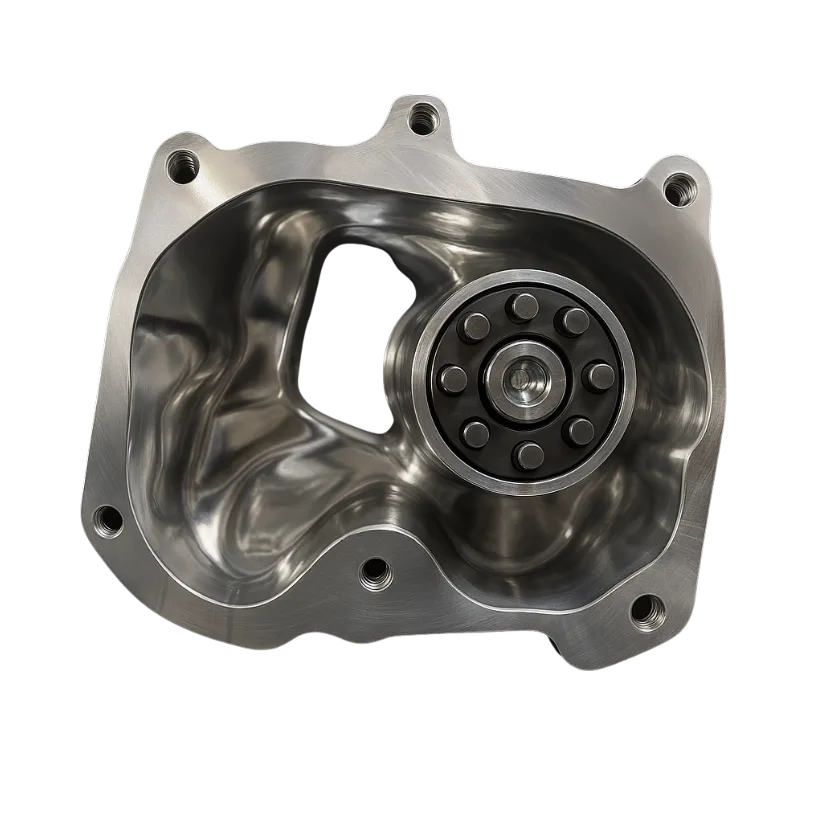
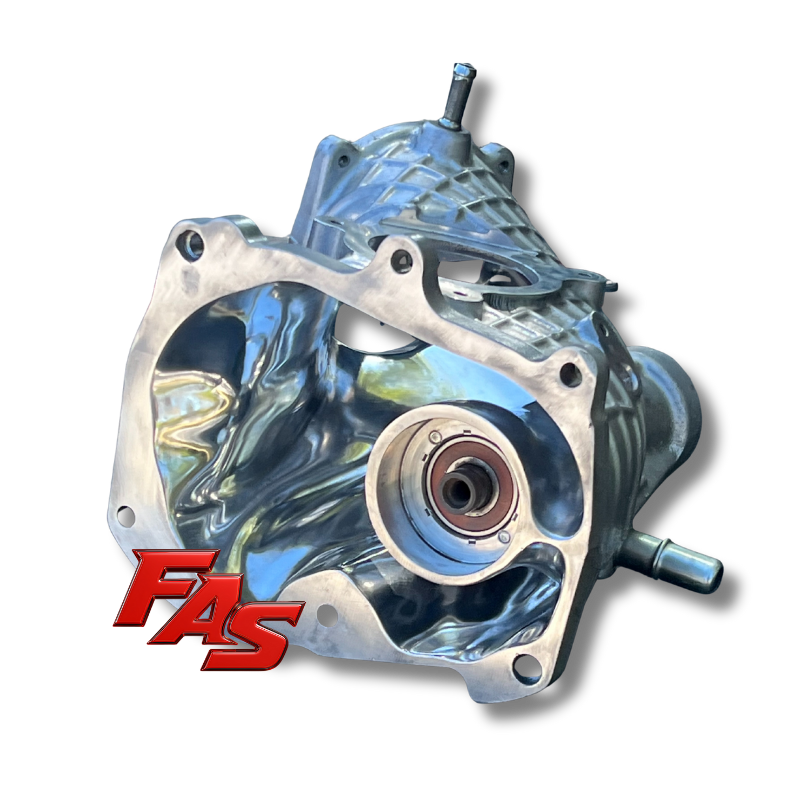
On a 6.2L Hellcat, the stock blower snout is already fairly well matched. On a 5.7L — which builds boost more readily and at lower RPM — the stock snout’s flow restriction shows up earlier in the RPM band. A ported IHI snout removes that restriction, improving midrange airflow and reducing heat at the rotor stack.
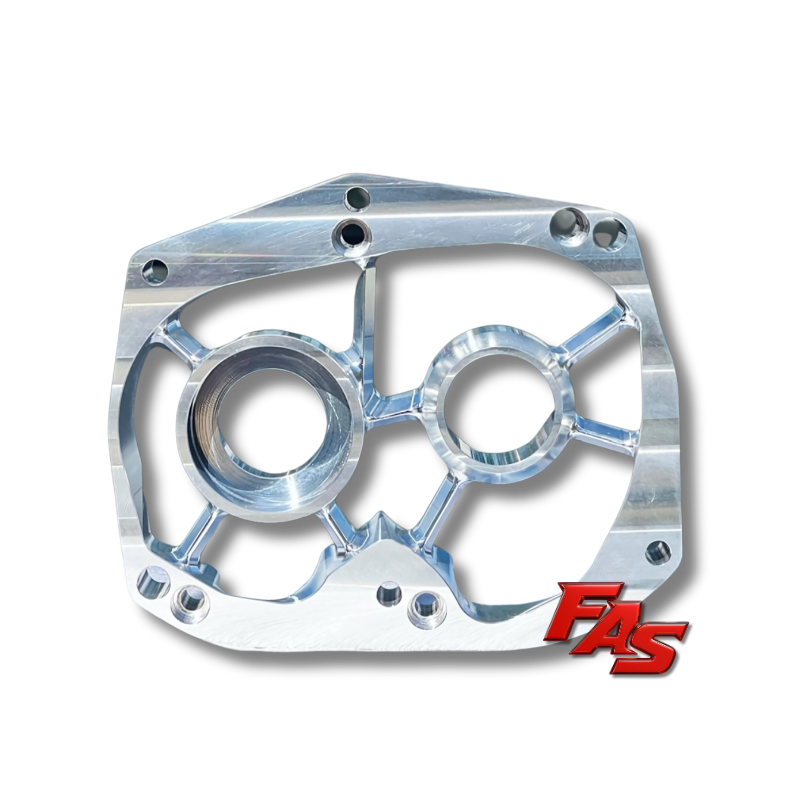
FAS Motorsports ports Hellcat supercharger snouts in-house. If you’re building a 5.7 HEMI supercharger kit around a used Hellcat blower, get the snout ported before the adapter goes on — the flow gains compound with the smaller-displacement engine.
Summary
- Yes, the Hellcat supercharger can be adapted to a 5.7 HEMI with a dedicated adapter kit
- Key requirements: adapter intake manifold, intercooler plumbing, throttle body adapter, fuel upgrade, custom ECU tune
- Safe stock-block power on a 5.7: up to ~480 whp on pump gas; beyond that, forged internals are needed
- Ported supercharger snout is especially valuable on smaller-displacement HEMI builds — contact FAS Motorsports for snout porting and rebuild services
Related Posts
Hellcat Supercharger Porting Explained: What It Does and When You Need It
If you're pushing a Hellcat, TRX, or Trackhawk past 700 whp, you've probably asked about supercharger porting — here's what it is & if it's right for you.
Hellephant C170 Engine: What It Is, What It Makes, and What It Costs
The Dodge Hellephant C170 crate engine makes 1,000 hp and 950 lb-ft from 426 cubic inches. What it is, what it costs, and what a complete build runs.
LT4 & Hellcat Supercharger Porting: FAS Porting Process, Gains & What It Costs
LT4 (C7 Z06, ZL1), 2.4L Hellcat TVS, and 2.7L IHI supercharger porting done in-house. Precision CNC port work, flow-bench verified, shipped back in 3–5 business days from Punta Gorda, FL.