Hellcat Ported Snout: What It Is, What It Does, and How Much Power to Expect
Hellcat Ported Snout: What It Is, What It Does, and How Much Power to Expect
When Hellcat owners talk about supercharger modifications, the conversation usually starts with pulley changes and tuning. But if you want real horsepower — the kind that shows up on the dyno sheet and you can feel in the seat — the hellcat ported snout is the modification that unlocks what a stock IHI blower is actually capable of.
Here’s what it is, why it works, and what you can realistically expect.
What Is the Supercharger Snout?
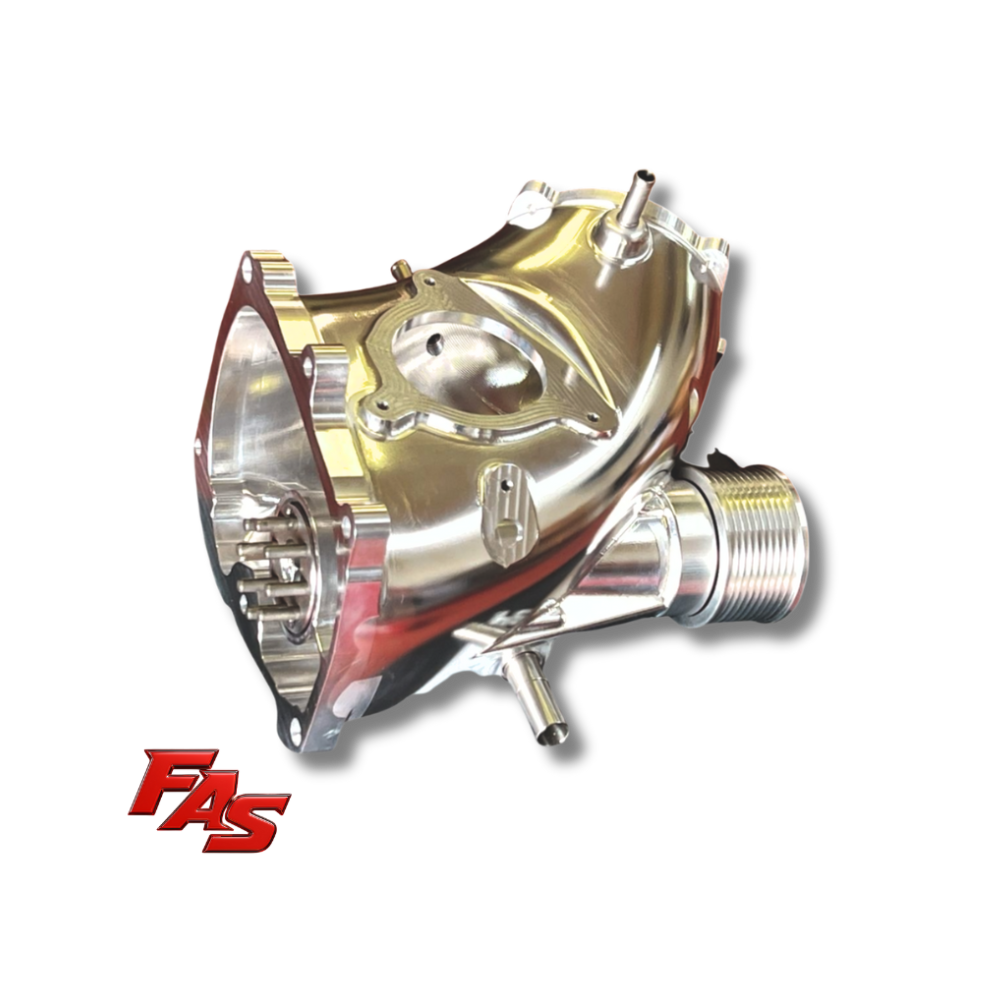
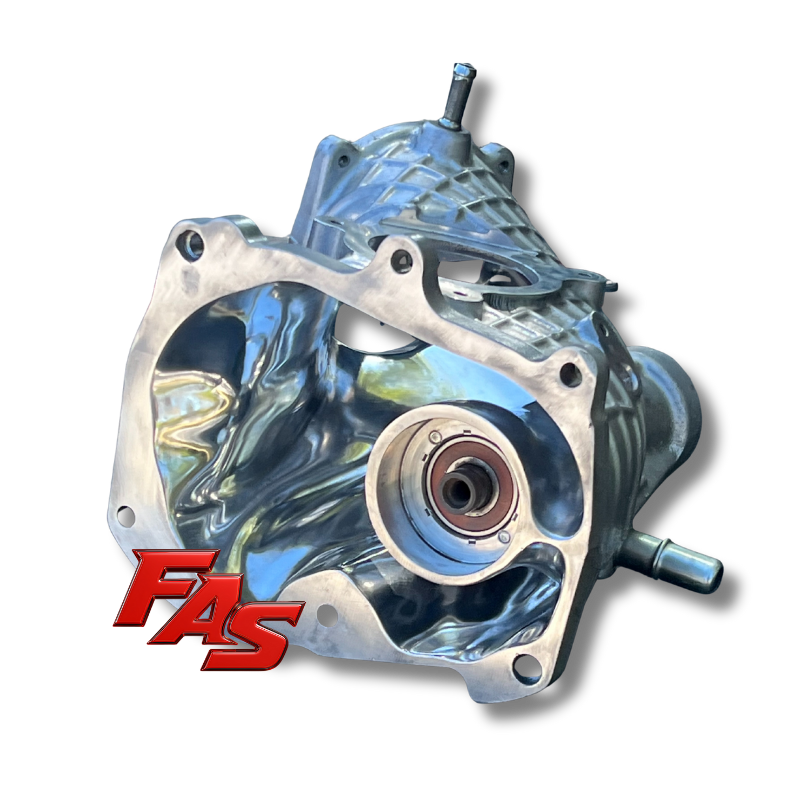
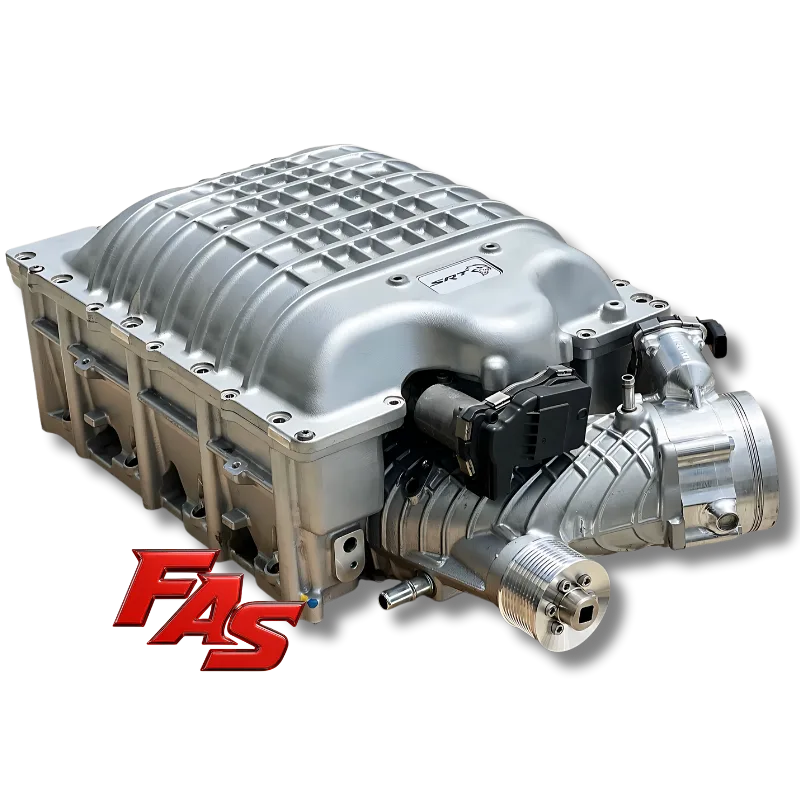
The snout is the front housing of the IHI 2.4L or 2.7L supercharger on your Hellcat, Trackhawk, Demon, Redeye, or TRX. It’s the entry point for all the air that enters the blower — the passage connecting the throttle body to the rotors.
From the factory, that snout is a cast aluminum housing. Casting is an efficient manufacturing process, but it leaves behind:
- Sharp inlet radius transitions that interrupt smooth airflow entering the rotor pack
- Casting flash and surface roughness that creates turbulence along the internal walls
- An undersized inlet bore that restricts flow as boost demand rises with pulley or tune upgrades
The snout is also where the throttle body mounts. When Hellcat owners upgrade to a 108mm or larger billet throttle body, they’re solving half the problem — the larger opening is still feeding into a restrictive cast passage unless the snout is ported to match.
What CNC Snout Porting Does
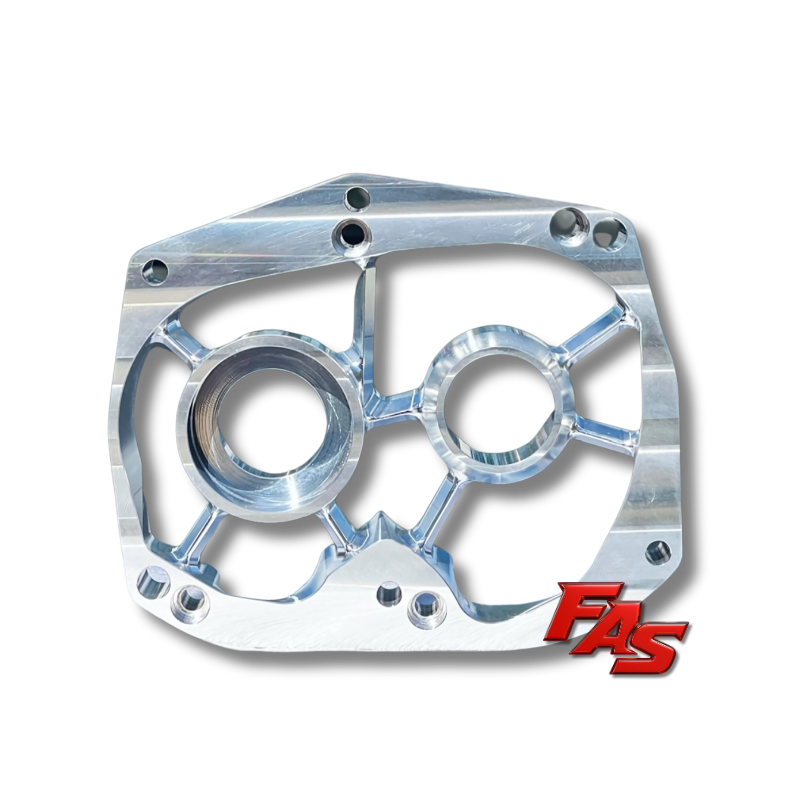
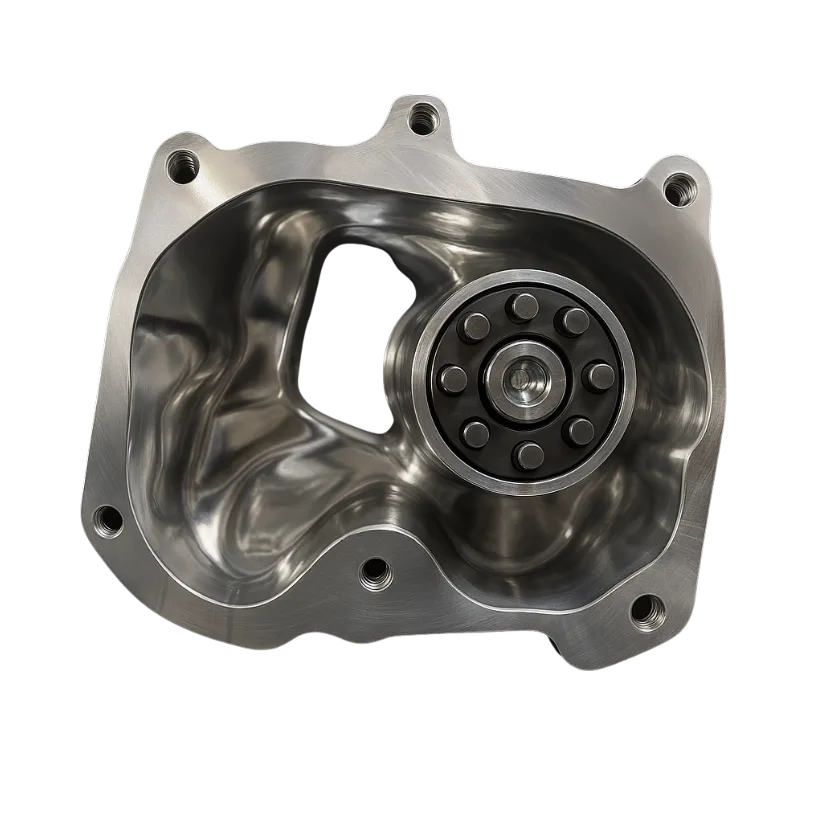
FAS Motorsports’ hellcat ported snout service is a precision CNC and hand-finishing process performed on your core snout (mail-in). The process covers:
1. Inlet enlargement — The inlet bore is opened and radiused to match a 108mm throttle body, eliminating the mismatch between an upgraded TB and the stock casting.
2. Runner deburring — All casting flash and sharp transitions are removed from the internal airflow path.
3. Internal polishing — FAS is the only Hellcat snout porting service that hand-polishes the inside of the housing during the porting process. Machined walls leave microscopic ridges that cause turbulent flow and friction; polished walls maintain laminar flow and reduce heat buildup inside the blower inlet.
4. Outlet throat optimization — The transition from the snout bore into the rotor inlet is blended for smooth velocity continuity.
The result: an airflow path that lets the rotors do what they were designed to do — move air efficiently — instead of fighting a restrictive cast inlet on every revolution.
How Much Power Does a Hellcat Ported Snout Add?
Power gains depend on supercharger size and what else is in the system. On the IHI platform the numbers are consistent:
2.4L (Hellcat / Trackhawk / Durango SRT / TRX)
Snout porting paired with a 108mm throttle body: 40–60 rwhp. Best combined with a bearing plate port and a tune targeting the new airflow capacity.
2.7L (Demon / Redeye)
Snout porting paired with a 108mm throttle body: 80–125 rwhp. The 2.7L sees higher absolute gains because the larger displacement rotor pack moves more air — removing the inlet restriction has a proportionally bigger impact.
These gains are additive. If you’ve already done a pulley, cold air intake, and tune, the ported snout brings another airflow layer that works with everything already in place.
Snout Porting vs. Bearing Plate Porting — Which First?
Both are inlet-side modifications to the IHI supercharger, but they target different restriction points:
- Snout porting — Inlet side (air entering the blower)
- Bearing plate porting — Discharge and rotor inlet ports (air moving through the blower)
If you’re building for maximum power, do both. If you’re prioritizing one, snout porting typically delivers the larger single-modification gain because the inlet restriction is more severe on stock castings.
For street builds pushing 750–900 rwhp on the 2.4L platform, snout porting plus a 108mm throttle body and tune is a complete bolt-on package. For builds pushing above 900 rwhp, you’ll want snout porting, bearing plate porting, a full rebuild, and likely billet rotors — see our complete Hellcat supercharger rebuild service.
Compatibility and Turnaround
Compatible applications: All 2014–present Hellcat, Trackhawk, Durango SRT/HC, TRX, Demon, and Redeye with IHI 2.4L or 2.7L supercharger.
Process: Ship your bare snout to FAS Motorsports in Punta Gorda, FL. We clean, inspect, port, and polish. Your ported snout ships back ready to install.
Turnaround depends on current shop workload and the condition of your part. Contact FAS before shipping for the latest timing.
FAQ — Hellcat Ported Snout
Does snout porting require a tune?
Not on its own, but you won’t capture the full power gain without one. If you’re adding a 108mm throttle body alongside the snout port, a tune is required to correct for the larger TB. Most shops can tune on the same dyno day as installation.
Can I do just the snout without the 108mm throttle body?
Yes, and you’ll still see gains — but the snout port is specifically sized to match the 108mm TB opening. Pairing both is how you get 40–60 rwhp on the 2.4L rather than a partial gain.
Does snout porting void my warranty?
Any supercharger modification can affect warranty coverage on related drivetrain components. Consult with your dealer if your vehicle is still under warranty before modifying.
What if my snout is damaged or corroded?
We inspect every core snout on arrival. If there’s damage that affects the porting process, we’ll contact you before proceeding.
Is this the same as a full supercharger rebuild?
No. Snout porting is a standalone inlet modification. A full rebuild also includes new bearings, updated seals, and rotor inspection. If you’re already pulling the blower for a rebuild, porting the snout at the same time is the right call — see the FAS Hellcat supercharger rebuild for the complete package.
Ready to Port Your Snout?
The hellcat ported snout from FAS Motorsports is one of the cleanest power-per-dollar modifications on the IHI platform — especially on the 2.7L Demon and Redeye, where inlet restriction is the primary limiter on stock rotor performance.
Order the FAS 2.4L / 2.7L Hellcat Snout Porting Service or explore our full lineup of Hellcat supercharger services if you’re planning a more complete build.
Related Posts
Hellcat Supercharger Porting Explained: What It Does and When You Need It
If you're pushing a Hellcat, TRX, or Trackhawk past 700 whp, you've probably asked about supercharger porting — here's what it is & if it's right for you.
Hellephant C170 Engine: What It Is, What It Makes, and What It Costs
The Dodge Hellephant C170 crate engine makes 1,000 hp and 950 lb-ft from 426 cubic inches. What it is, what it costs, and what a complete build runs.
LT4 & Hellcat Supercharger Porting: FAS Porting Process, Gains & What It Costs
LT4 (C7 Z06, ZL1), 2.4L Hellcat TVS, and 2.7L IHI supercharger porting done in-house. Precision CNC port work, flow-bench verified, shipped back in 3–5 business days from Punta Gorda, FL.