Airflow Bottlenecks in Forced-Induction Builds: What's Choking Your Power
Every forced-induction build has a ceiling. At some point, adding boost stops translating into more power — and the reason is almost always airflow restriction somewhere in the system. The blower or turbo is moving air, but something downstream (or upstream) is preventing it from getting where it needs to go efficiently.
This guide walks through the most common airflow bottlenecks in forced-induction builds, how to identify them, and the correct order to address them.
Why Airflow Restriction Matters More Than Boost Numbers
Pressure and flow are related but different. Boost pressure (measured in psi) tells you how hard the air is being pushed — not how much air is actually moving. A restriction downstream raises the pressure reading but reduces mass airflow, which is what the engine actually uses to make power.
A classic example: bolting a larger throttle body onto a boosted engine without addressing the intake elbow or intercooler core. Boost number holds steady. Power barely moves. The restriction isn’t where you think it is.
Diagnosing airflow restrictions means looking at the entire path air travels — from atmosphere through the filter, into the blower or turbo, through the intercooler, past the throttle body, into the intake manifold, and finally into the cylinder. Any meaningful restriction anywhere in that path costs power.
The Forced-Induction Airflow Path
Here’s the full air path on a typical supercharged build (turbo builds follow the same logic with a different component order):
- Cold air intake / inlet duct → filter → inlet elbow
- Supercharger inlet (snout / blower inlet port)
- Rotors (compression happens here)
- Discharge port → outlet elbow
- Intercooler core (heat exchanger, air-to-air or air-to-water)
- Throttle body
- Intake manifold → cylinder head ports → combustion chamber
Every joint in this path is a potential restriction.
Bottleneck 1: The Intake and Inlet Elbow
The air path before the blower sets the stage for everything downstream. If the blower can’t pull enough air efficiently, it runs hotter and works harder to build the same pressure.
Common restrictions:
- Stock airbox with restrictive panel filter
- Tight-radius inlet elbow (especially 90° bends close to the blower inlet)
- Undersized inlet duct diameter
- Short-ram intake positioned in a hot underhood location
Signs this is your bottleneck:
- IAT (inlet air temperature) spike under sustained load
- Boost builds slowly in the midrange but holds fine near redline
- Cold air intake swap produces a real, measurable gain (not just sound)
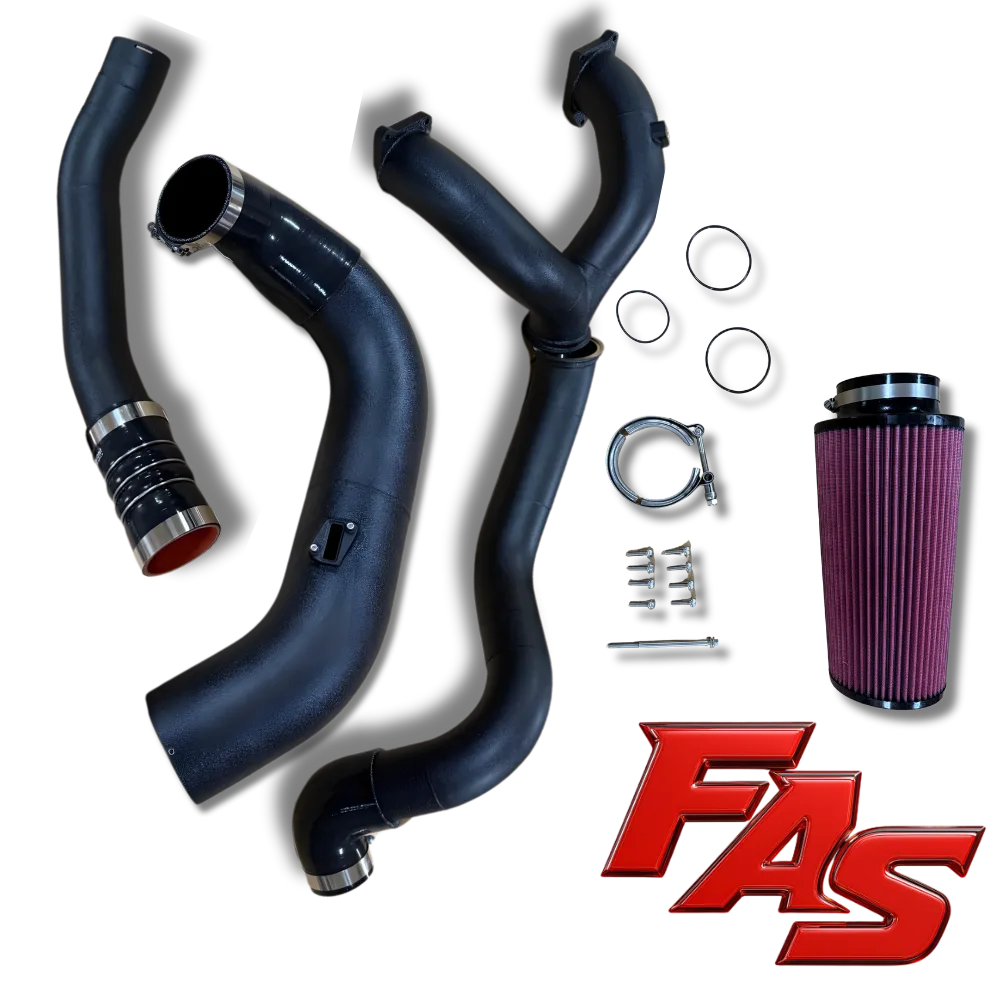
Fix: A properly sized cold-air intake routed away from heat sources is the starting point. On Hellcat platforms, a high-flow inlet elbow (the rubber piece connecting the airbox to the blower snout) is a frequently overlooked restriction — many stock elbows have a significant inner lip at the joint.
Bottleneck 2: Supercharger Inlet and Discharge Ports
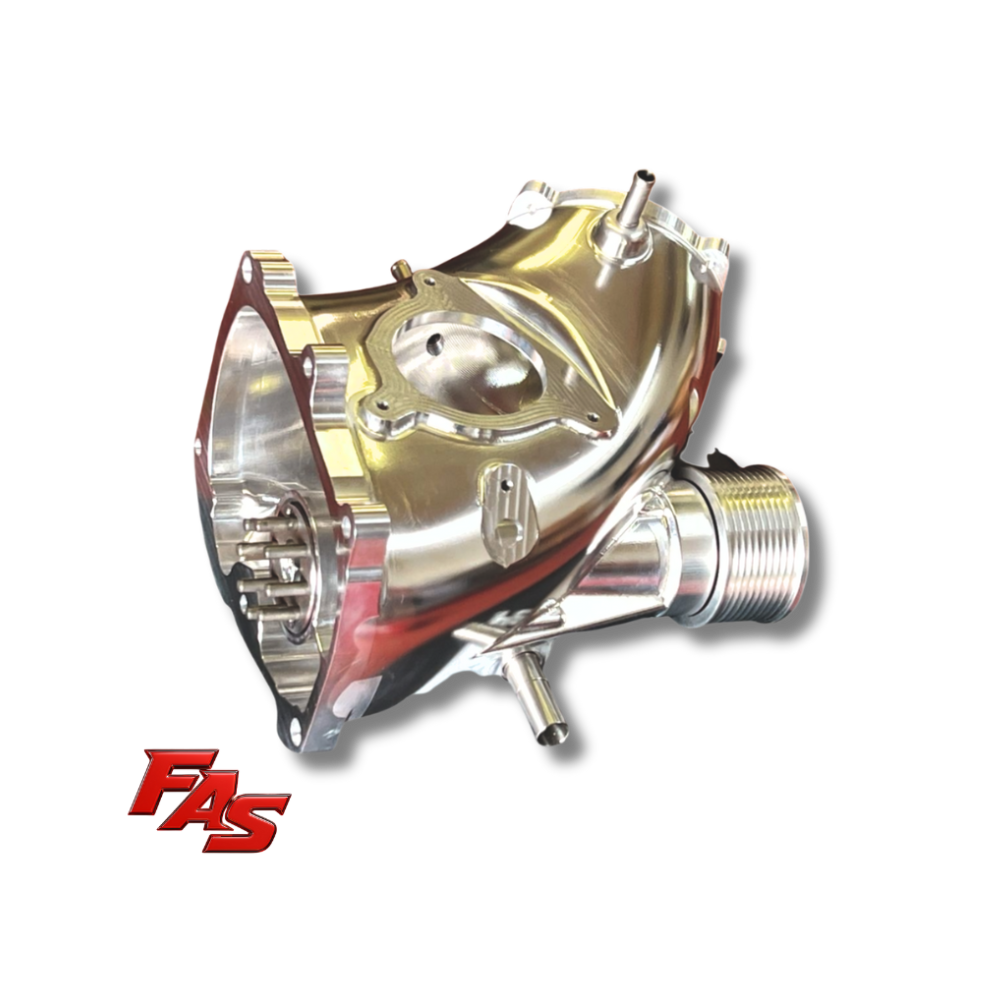
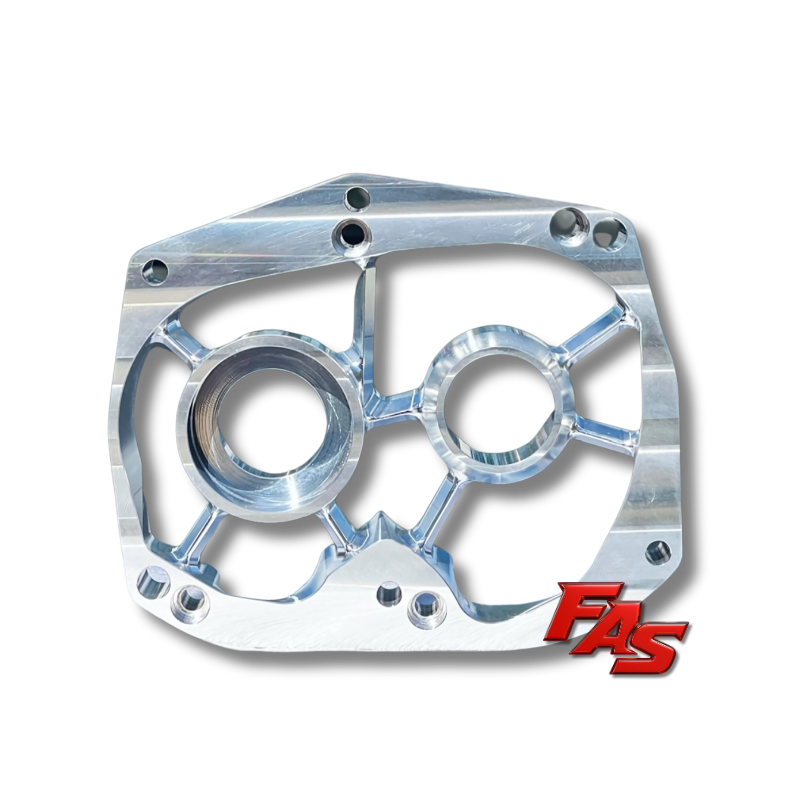
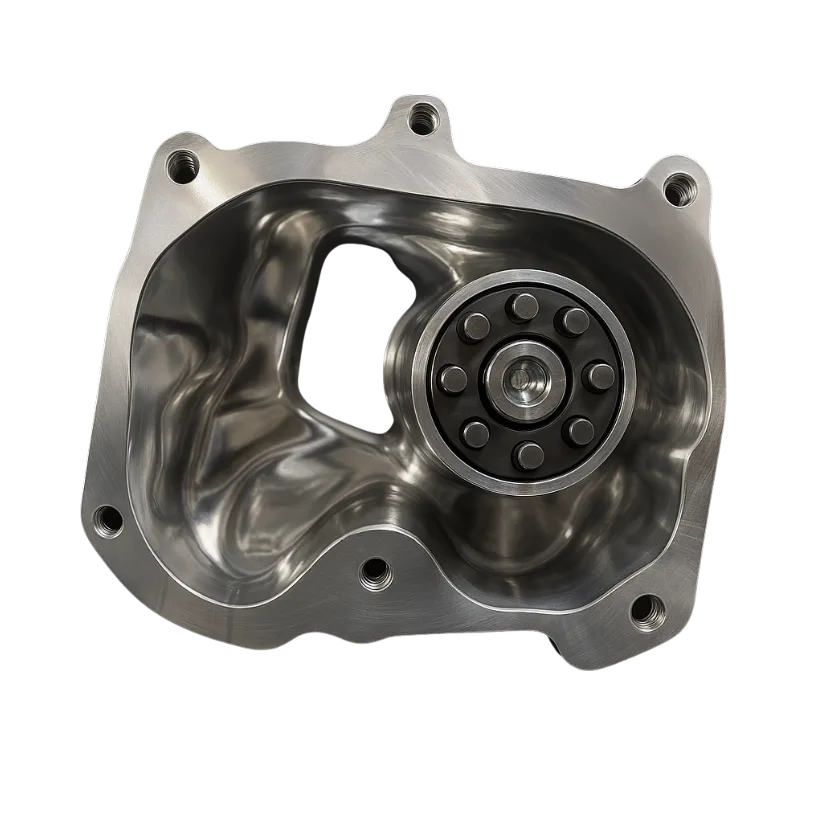
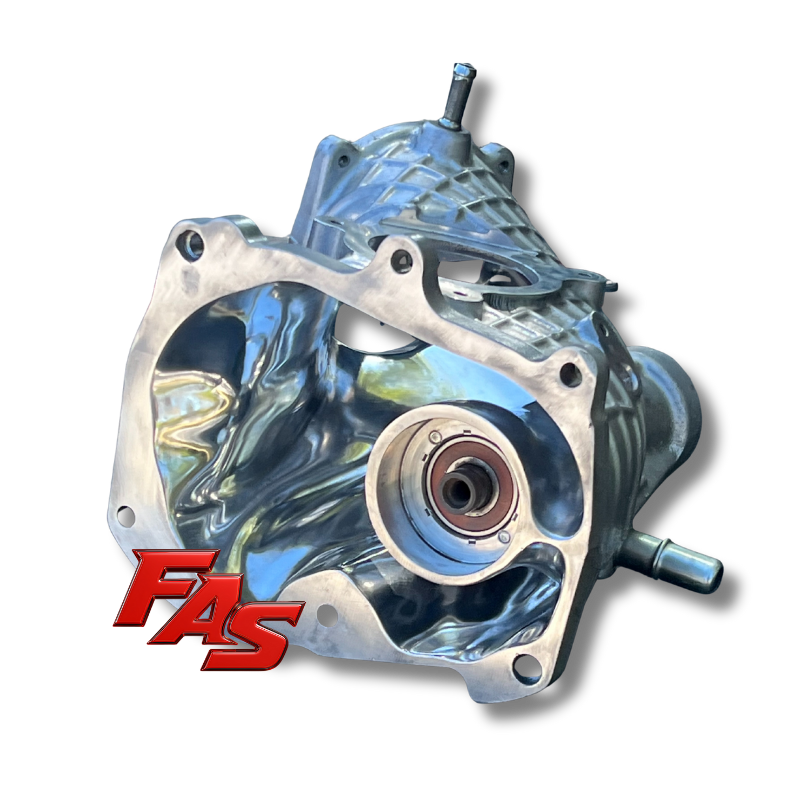
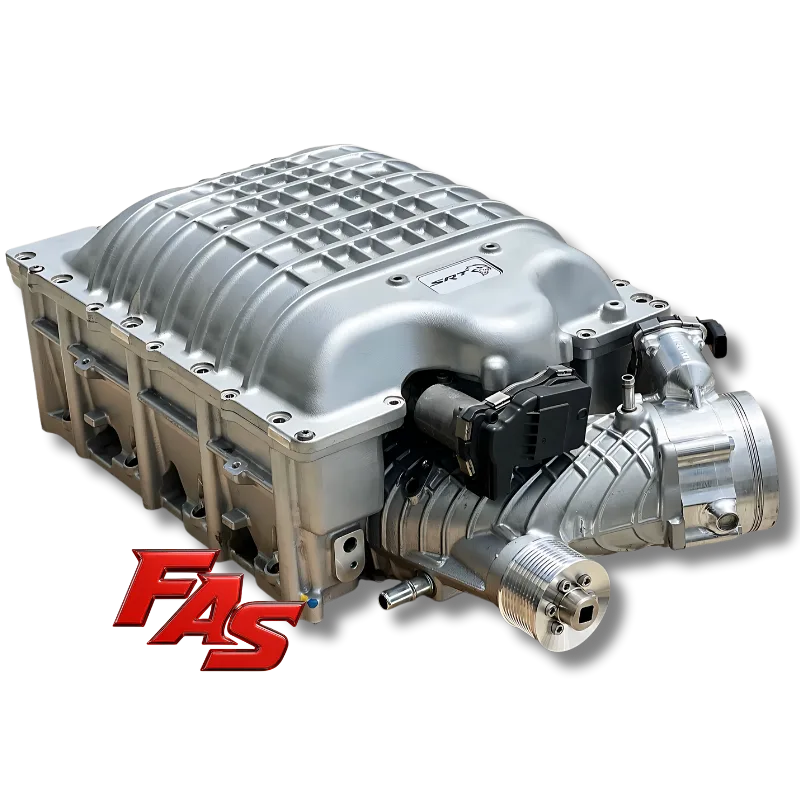
On positive-displacement blowers (Roots/TVS), the housing itself has cast ports where air enters and exits the rotor pack. These ports are sized for factory power targets and often have casting flash — leftover material from the manufacturing process — that narrows the effective opening.
Where this shows up:
- Inlet port: restricts how much air can enter the rotors per revolution
- Discharge port: restricts how fast compressed air can exit to the intercooler
- Snout inlet: the nose piece of the blower often has the most pronounced factory restriction
Signs this is your bottleneck:
- Boost falls off at high RPM (rotors are trying to push more air than the ports can pass)
- IAT climbs higher than expected at a given boost level (blower working harder = more heat)
- Power improves meaningfully after a porting job without any other changes
Fix: Professional porting of the inlet, discharge, and snout. On Hellcat 2.4L TVS units, a properly ported snout is good for 25–40 WHP on a supporting-modded build. See the Hellcat Supercharger Porting Guide for specifics.
Bottleneck 3: The Intercooler
The intercooler is the most frequently underestimated restriction in boosted builds. An undersized or heat-soaked intercooler is like a partially-closed valve between the blower and the engine — pressure drops across it, and hot air loses density, both costing power.
Two types of intercooler restriction:
Thermal restriction — the core can’t shed heat fast enough. Air enters hot and exits almost as hot. Dense air in, dense air out is the goal. If charge temps are elevated, the ECU pulls timing to prevent detonation, which directly kills power — even if boost number is unchanged.
Flow restriction — the core is undersized for the airflow volume, creating a pressure drop between the blower outlet and the throttle body. This is harder to feel subjectively but shows up clearly in back-to-back datalog comparison.
Signs the intercooler is the bottleneck:
- IAT rises progressively on back-to-back pulls (heat soak)
- Power drops significantly on the 2nd and 3rd pull compared to the 1st (cold)
- High-ambient-temperature days produce noticeably less power
- Boost shows fine pre-intercooler but pressure drops meaningfully post-intercooler
Fix: Upgraded intercooler with a larger core volume and better heat exchange efficiency. On air-to-water systems (like the Hellcat’s lid-mounted unit), a larger heat exchanger and improved water-to-air heat exchanger combination addresses both issues. Don’t just upsize one side.
Bottleneck 4: The Throttle Body
Throttle body sizing matters more on boosted applications than naturally aspirated ones because air enters under pressure — a restriction here affects the entire system upstream of it.
When the throttle body becomes the bottleneck:
- Generally only relevant at power levels significantly above factory (typically 800+ HP on Hellcat platform)
- Undersized throttle body creates a pressure differential visible in pre/post-throttle pressure comparison
- Most stock factory throttle bodies are adequately sized for bolt-on power levels
Caveat: Throttle body upgrades that skip supporting inlet and intercooler work rarely show a gain. Fix the restrictions in order — the TB is typically last.
Bottleneck 5: Intake Manifold and Port Matching
On the intake manifold side (post-throttle), airflow restrictions appear as:
- Sharp corners in the plenum
- Port mismatch between manifold gasket and head port
- Undersized runners for the target displacement and RPM range
This is less common as a primary bottleneck on street builds and more relevant on purpose-built race engines where every other restriction has already been addressed.
Diagnosing Bottlenecks: What to Log
A proper diagnosis uses a wideband AFR, IAT sensors pre- and post-intercooler, boost pressure pre- and post-throttle body (if possible), and RPM vs. boost tracking across the full pull. Compare cold pulls versus heat-soaked pulls. If power drops more than 2–3% pull-to-pull, you have a thermal restriction. If the boost curve is lower than expected at high RPM, you have a flow restriction.
Minimum datalogs for diagnosis:
- IAT (intake air temperature)
- Manifold absolute pressure (MAP)
- Throttle position
- Engine load
Related Posts
Hellcat Supercharger Porting Explained: What It Does and When You Need It
If you're pushing a Hellcat, TRX, or Trackhawk past 700 whp, you've probably asked about supercharger porting — here's what it is & if it's right for you.
Hellephant C170 Engine: What It Is, What It Makes, and What It Costs
The Dodge Hellephant C170 crate engine makes 1,000 hp and 950 lb-ft from 426 cubic inches. What it is, what it costs, and what a complete build runs.
LT4 & Hellcat Supercharger Porting: FAS Porting Process, Gains & What It Costs
LT4 (C7 Z06, ZL1), 2.4L Hellcat TVS, and 2.7L IHI supercharger porting done in-house. Precision CNC port work, flow-bench verified, shipped back in 3–5 business days from Punta Gorda, FL.