Snout Porting vs. Pulley Upgrades: A Hellcat Owner's Decision Guide

Two Paths to More Power — and They're Not the Same
If you own a Hellcat and you've started researching upgrades, you've probably hit this fork in the road: snout porting or a pulley upgrade. Both add power. Both are popular. And both are regularly misunderstood — sometimes by the shops recommending them.
This guide breaks down what each modification actually does mechanically, what stage of build each belongs in, and how to decide which one (or which order) makes sense for your car.
---
What Is Snout Porting?
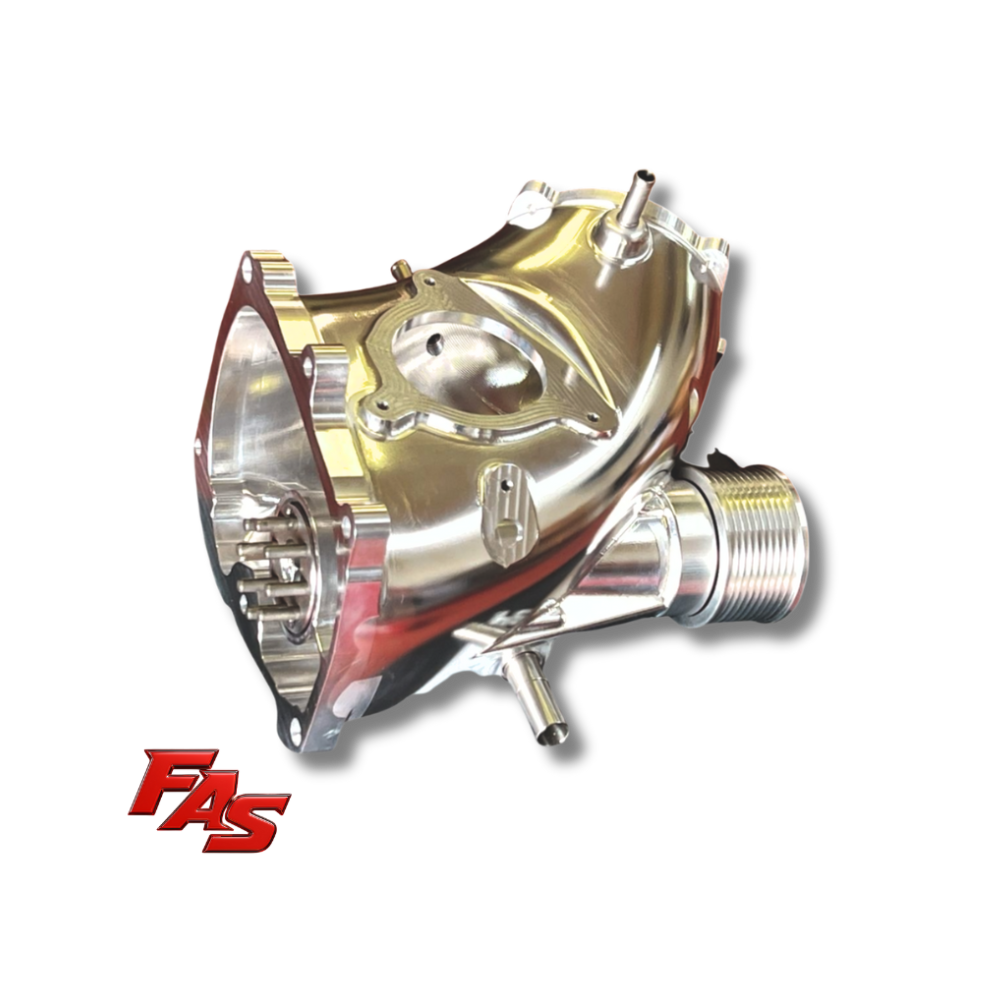
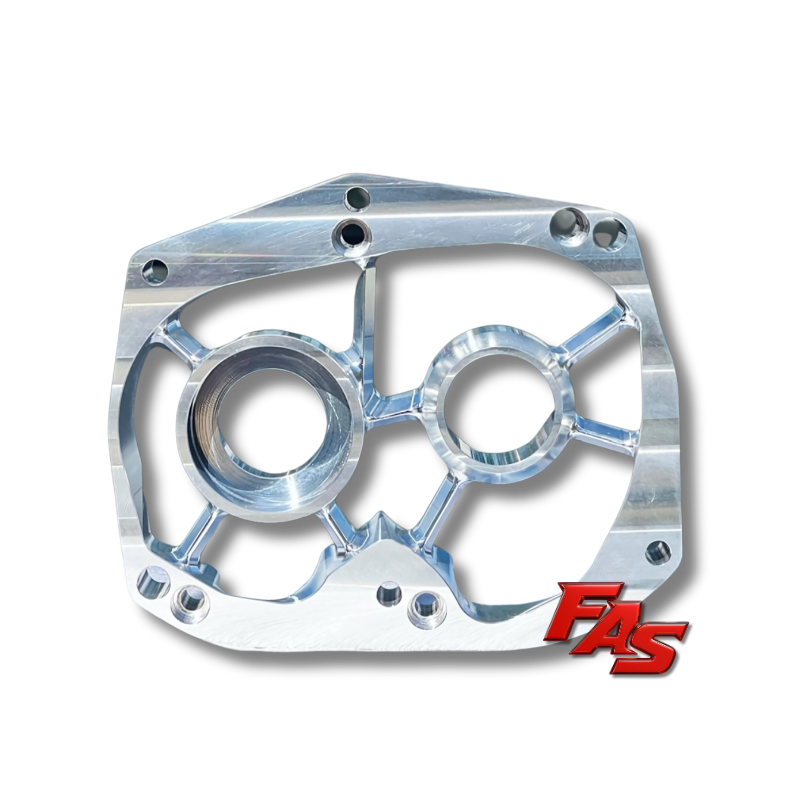
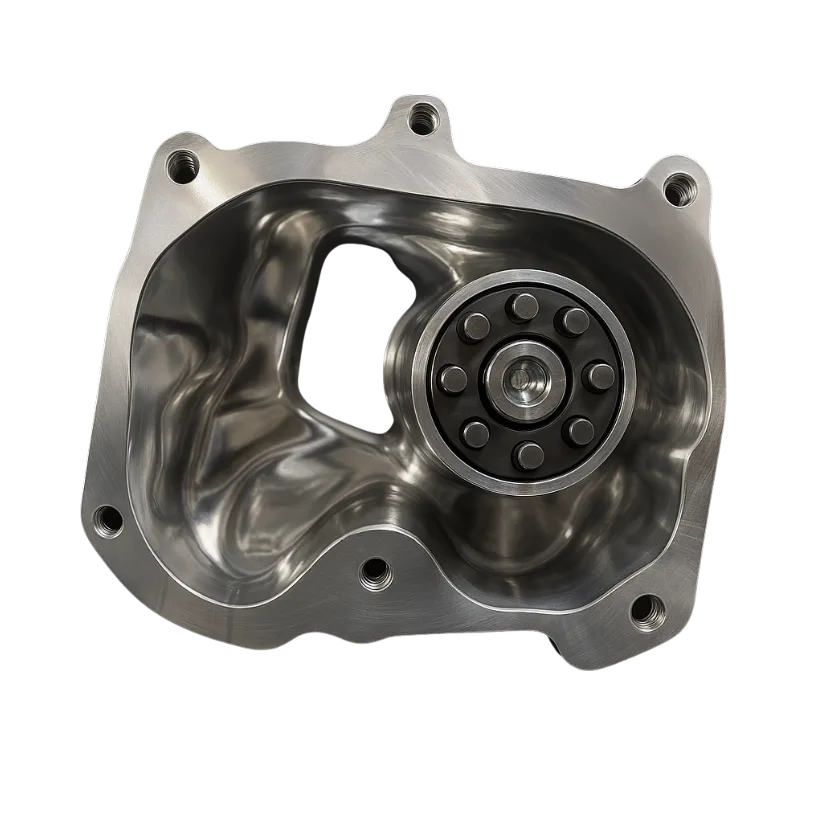
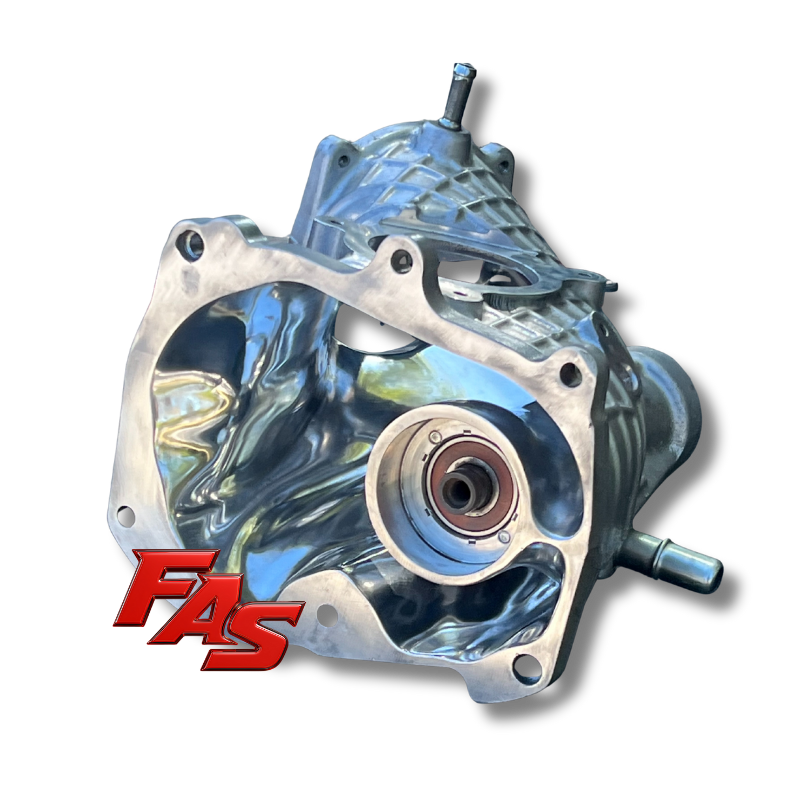
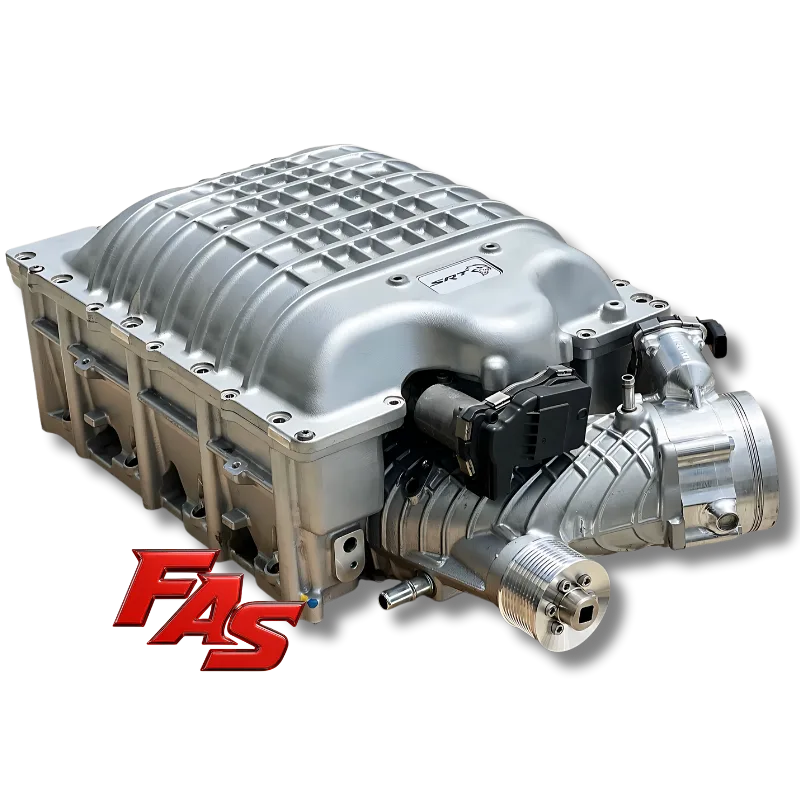
The "snout" on the Hellcat's IHI 2.4L twin-screw supercharger is the front housing — the inlet piece that directs incoming air into the rotor pack. It's not the rotor housing itself, but it's the first choke point the charge air encounters on its way into the blower.
Snout porting is a precision machining process: the inlet passages are opened up, smoothed, and reshaped to reduce restriction and turbulence before the air even reaches the rotors. Done correctly, it's a form of supercharger porting — enlarging and reshaping inlet and outlet ports to increase volumetric efficiency without changing the blower's displacement.
What changes: - Reduced inlet restriction — air enters the rotor pack with less drag - Lower charge air temperature — less turbulence means less parasitic heat - Improved volumetric efficiency — the blower does the same work with less effort
What does not change: - Boost target (peak PSI stays roughly the same without a tune change) - The blower's fundamental displacement (still 2.4L) - Your overall boost strategy
Snout porting is a quality-of-airflow upgrade, not a quantity-of-boost upgrade.
---
What Is a Pulley Upgrade?
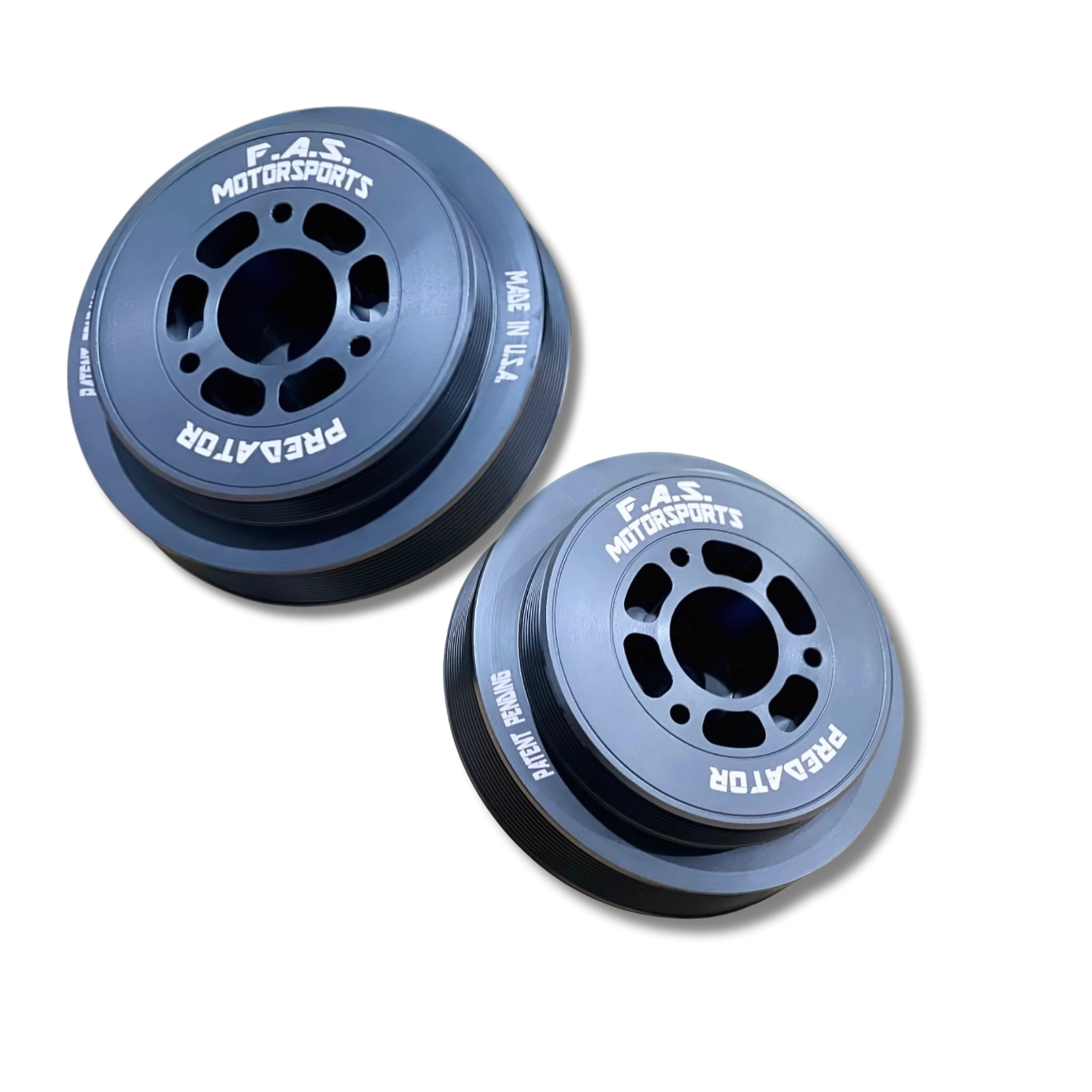
The supercharger is driven by a belt connected to the crankshaft. The relative size of the supercharger pulley versus the crank pulley determines how fast the rotors spin — and therefore how much boost the blower makes.
A smaller supercharger pulley = rotors spin faster = higher boost pressure.
A pulley upgrade (commonly called an "overdrive pulley" or "underdrive" depending on which pulley you're changing) increases the supercharger's drive ratio. The result is more boost — but the blower is now working harder to make it.
What changes: - Boost pressure increases — more PSI going into the engine - Heat increases — positive displacement blowers generate more heat as they work harder - Power increases — more boost + proper fuel and tune = more output - Tune requirement — a pulley swap without a supporting tune is asking for engine damage
What does not change: - Blower efficiency (the rotor pack is still the same; it's just spinning faster) - Charge air quality (faster rotation = more heat, not less)
A pulley upgrade is a quantity-of-boost upgrade. You're asking the same blower to do more work.
---
The Core Tradeoff: Efficiency vs. Quantity
Here's the framing that makes the choice clear:
| | Snout Porting | Pulley Upgrade | |---|---|---| | What it changes | Airflow quality into the blower | Boost pressure (PSI) | | Effect on heat | Reduces charge temps (less turbulence) | Increases heat (blower works harder) | | Effect on efficiency | Improves volumetric efficiency | No efficiency gain — same blower, faster | | Tune required? | Recommended; not always mandatory | Always mandatory | | Best build stage | Early to mid build | Mid to late build | | Reversible? | No — permanent machining | Yes — pulleys are a bolt-on swap | | Works best with | Stock or mild supporting mods | Full supporting mod package |
---
When to Choose Snout Porting
Snout porting makes the most sense when:
You're building a daily driver or street car. The efficiency gain and heat reduction benefit a car that sits in traffic, idles, and lives in hot Florida summers. Lower charge temps on a street car translate to consistent pull-to-pull performance, not just peak dyno numbers.
You're on a modest supporting mod package. If you haven't addressed fuel (injectors, pump), intercooler, or tune yet, adding more boost via a pulley is a risk. Porting improves what you have without escalating boost targets beyond what your current tune and fuel system can support.
You're starting a performance build and want to do it right from the beginning. Port first, then build boost on top of an efficient foundation. This is the cleaner sequence.
You want a permanent improvement. Snout porting is a one-time service — ship the blower in, get it back better than it left. You don't revisit it.
---
When to Choose a Pulley Upgrade
A pulley upgrade makes sense when:
Your supporting mods can handle more boost. You've got the tune, fuel, intercooler, and possibly headers to support higher boost targets. Now you're ready to push the number up.
You've already ported the blower. Porting improves efficiency. A pulley upgrade then increases boost on top of that efficient foundation. This is the ideal sequence for high-output builds.
You want a specific power target that requires more boost. If you're building toward 800+ whp, a pulley is part of that equation. Porting alone won't get you there — at some point you need more PSI, and the pulley delivers it.
You want something reversible. A pulley swap is a bolt-on change. You can go back to stock or try a different overdrive ratio. Porting is permanent.
---
The Sequence That Makes Sense
For most Hellcat builds targeting meaningful power gains, the sequence is:
1. Port the supercharger — improve efficiency first 2. Address supporting mods — fuel, intercooler, exhaust, tune baseline 3. Add pulley overdrive — now you're adding boost to an efficient, properly supported foundation
Doing it in reverse (pulley first, then porting) works, but you're adding heat and stress to an unoptimized blower before you've squeezed the efficiency gains out of it. You'll also be re-tuning twice — once for the pulley, once after porting changes the blower's behavior.
---
One More Thing: Snout vs. Full Port
You'll also see "full port" or "full supercharger port" referenced alongside snout porting. The distinction:
- Snout porting: inlet housing only — the nose piece before the rotors - Full port: inlet and outlet ports of the entire blower housing — more complete, more labor, larger efficiency gain
If you're sending the blower in anyway, ask what's included in the service and whether a full port makes sense for your build goals.
---
FAS Motorsports Supercharger Porting
Turnaround depends on current shop workload and the condition of your part. Contact FAS before shipping for the latest timing.
If you're at the fork between porting and a pulley and want a straight answer for your specific build, contact FAS directly — they can walk through your setup and tell you which modification delivers the most value at your current stage.
Build path shortcut
Map Your Next Hellcat Upgrade Against the Full Product Line
Use the shop landing page to compare the 2.4L and 2.7L packages, billet snout options, bearing service, and rebuild paths in one place.
Compare Hellcat Supercharger OptionsNeed Parts for Your Hellcat Supercharger Build?
Shop complete Hellcat supercharger upgrade options — Dominator packages, billet snouts, and rebuild services — on one landing page.
Explore Hellcat Supercharger Upgrades →Related Posts
Hellcat Supercharger Porting Explained: What It Does and When You Need It
If you're pushing a Hellcat, TRX, or Trackhawk past 700 whp, you've probably asked about supercharger porting — here's what it is & if it's right for you.
Hellephant C170 Engine: What It Is, What It Makes, and What It Costs
The Dodge Hellephant C170 crate engine makes 1,000 hp and 950 lb-ft from 426 cubic inches. What it is, what it costs, and what a complete build runs.
LT4 & Hellcat Supercharger Porting: FAS Porting Process, Gains & What It Costs
LT4 (C7 Z06, ZL1), 2.4L Hellcat TVS, and 2.7L IHI supercharger porting done in-house. Precision CNC port work, flow-bench verified, shipped back in 3–5 business days from Punta Gorda, FL.