Running a Hellcat Supercharger on an LS Swap: Fitment, Adapters, and Tuning
The Hellcat blower on an LS is one of the more popular cross-platform swaps in the performance world — it pairs a proven positive-displacement supercharger with the LS engine family's enormous aftermarket support. It's also not a bolt-on job. Here's what's actually involved.
Why Builders Pair a Hellcat Blower with an LS
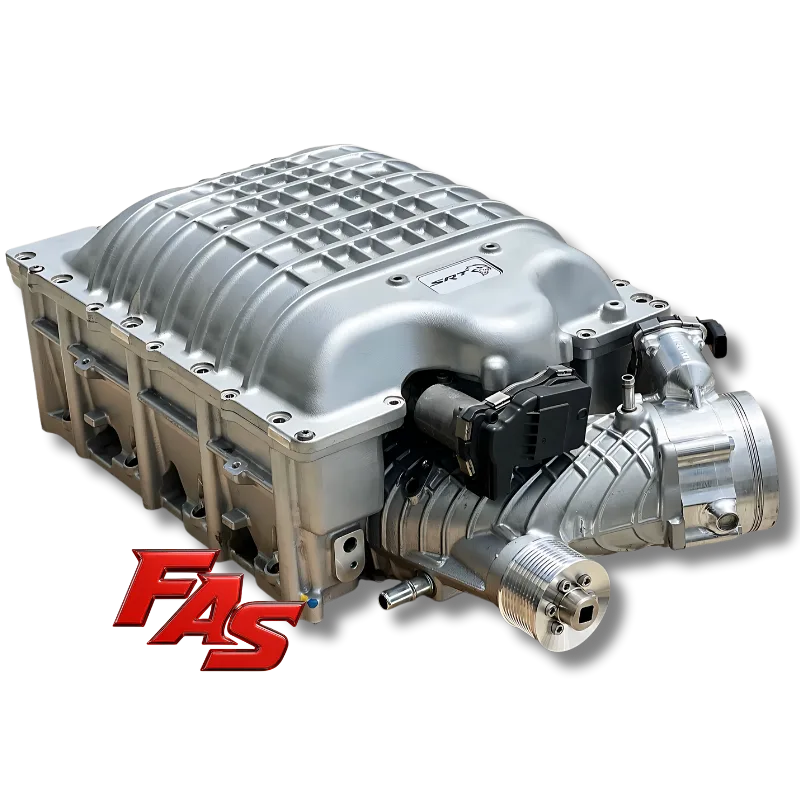
The Hellcat's 2.4L and 2.7L IHI twin-screw superchargers are positive-displacement units — they deliver boost from idle rather than building it with RPM the way a centrifugal blower does. Combine that with a used market that makes a Hellcat blower more affordable than many purpose-built LS supercharger kits, and it's easy to see the appeal for LS-swapped Camaros, trucks, and project builds.
What the Swap Actually Requires
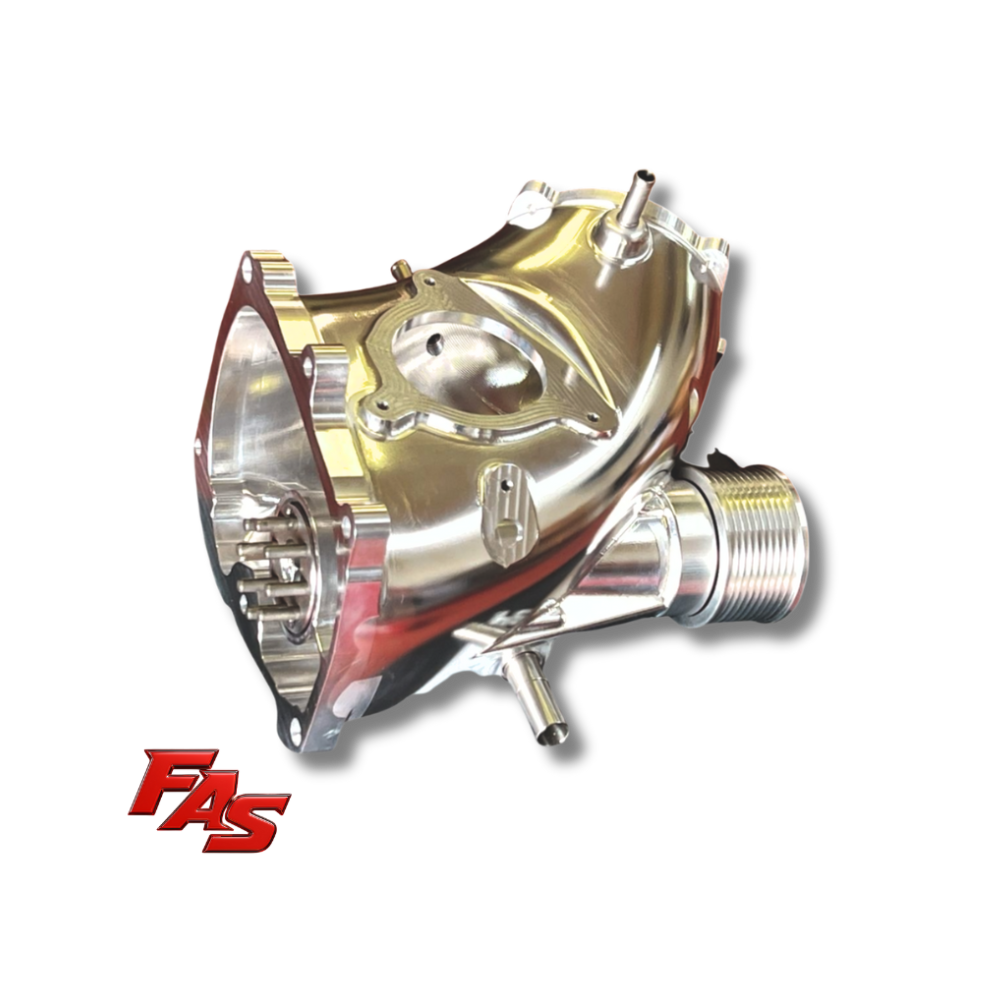
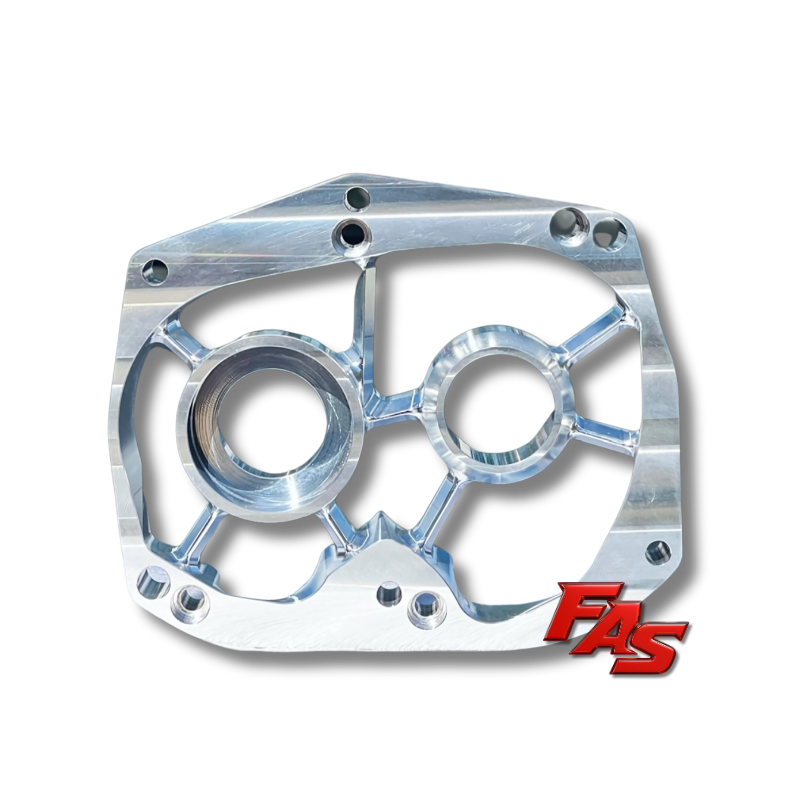
An adapter. The Hellcat supercharger bolts to a HEMI intake pattern, not an LS pattern, so the swap starts with an adapter that bridges the two. Billet, port-matched hardware is the standard here — a cast adapter under repeated boost and heat cycling is a common failure point in this style of build.
Charge cooling. The Hellcat supercharger uses an integrated water-to-air charge cooler, not a simple air-to-air setup. That means the swap includes plumbing a dedicated coolant loop — pump, heat exchanger, reservoir — separate from the engine's own cooling system. This isn't optional; without it, inlet air temperatures climb quickly under sustained boost.
Fueling. The LS's stock fuel system is undersized for a boosted application. How far you need to go — injectors, pump, a return-style system — scales with your power target and is a conversation to have with your tuner before you order parts, not after.
Tuning. The ECU needs to be told how to run a positive-displacement blower the platform wasn't originally designed around — boost target, spark strategy under load, injector scaling, and knock protection. Look for a tuner with documented experience on boosted LS platforms, not a general street tune.
Where Porting Fits In
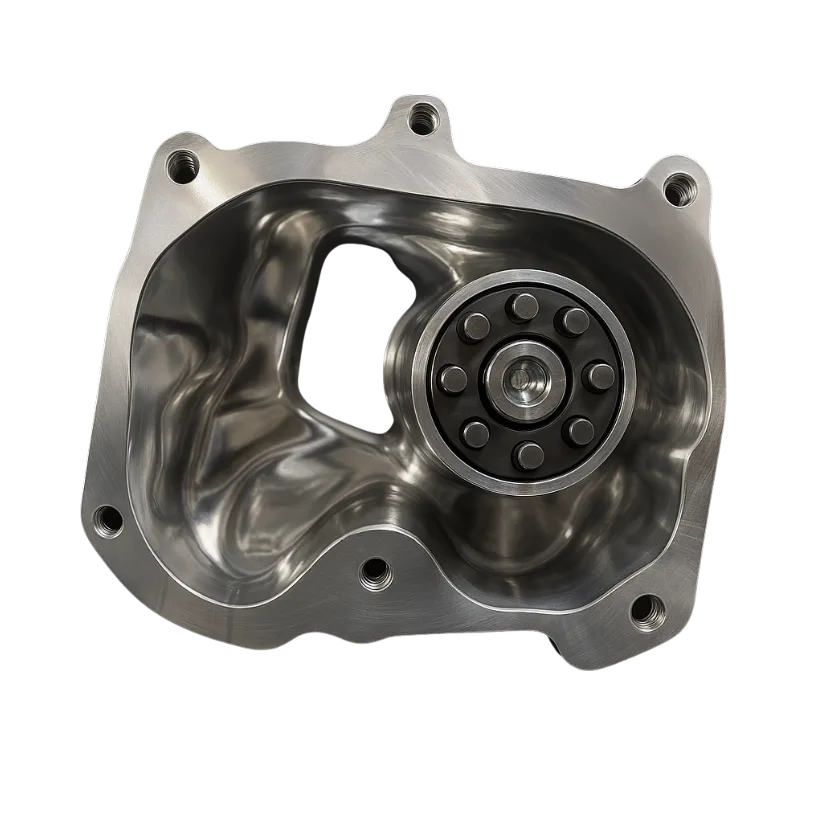
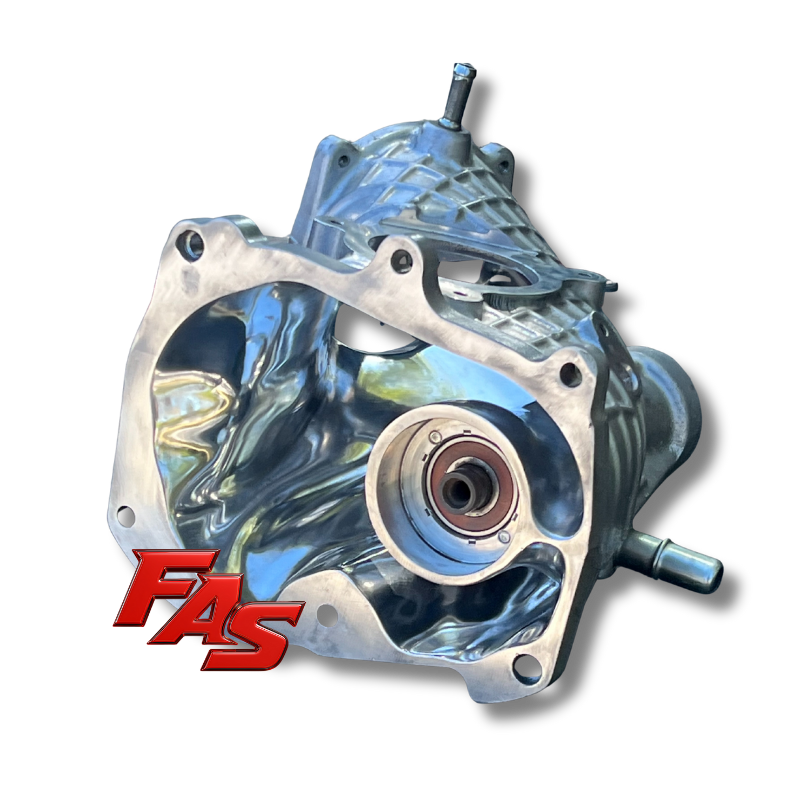
If you're sourcing a used Hellcat supercharger for the swap, having it inspected — and ported, if you're chasing more output — while it's off the vehicle and accessible is worth doing before it goes on the engine. FAS's 2.4L/2.7L Hellcat snout porting and IHI supercharger rebuild services are built around this exact unit. If your LS runs a factory GM blower instead — LSA, LS9, or LT4 — we port those directly as well; see our LSA / LS9 / LT4 supercharger porting service.
Talk to Us Before You Order Parts
Adapter selection, charge cooling capacity, fueling, and tune all depend on your specific LS platform, target power, and budget — we're not going to hand you a generic spec sheet and call it a swap guide. What we can do is inspect or port your Hellcat blower and point you toward the right supporting setup for your build. Contact FAS Motorsports to talk through your LS swap, or read our Hellcat supercharger porting explained breakdown and our 2.4L vs 2.7L Hellcat supercharger comparison to understand which blower variant fits your goals.
Related Posts
Hellcat Supercharger Porting Explained: What It Does and When You Need It
If you're pushing a Hellcat, TRX, or Trackhawk past 700 whp, you've probably asked about supercharger porting — here's what it is & if it's right for you.
Hellephant C170 Engine: What It Is, What It Makes, and What It Costs
The Dodge Hellephant C170 crate engine makes 1,000 hp and 950 lb-ft from 426 cubic inches. What it is, what it costs, and what a complete build runs.
LT4 & Hellcat Supercharger Porting: FAS Porting Process, Gains & What It Costs
LT4 (C7 Z06, ZL1), 2.4L Hellcat TVS, and 2.7L IHI supercharger porting done in-house. Precision CNC port work, flow-bench verified, shipped back in 3–5 business days from Punta Gorda, FL.